I still remember the day I realized that how to organize your kitchen drawers wasn’t just about throwing some dividers in and calling it a day. I was in my own tiny kitchen, struggling to find the one spoon I needed amidst the chaos of my utensil drawer. It was then that I decided to apply the same principles of workflow optimization that I use in my engineering work to my kitchen. I started by identifying the most frustrating areas, like the junk drawer that seemed to suck in every miscellaneous item, and set out to create a system that would make cooking easier, not harder.
In this article, I’ll share my step-by-step approach to transforming your kitchen drawers from cluttered nightmares into _well-oiled machines_. You’ll learn how to assess your current setup, purge the items you don’t need, and implement a customized organization system that fits your unique cooking style. My goal is to provide you with practical, actionable advice that will make a real difference in your daily cooking routine, whether you’re a busy professional or an avid home cook. By the end of this guide, you’ll be equipped with the knowledge and confidence to tackle even the most daunting kitchen organization projects and start cooking with ease.
Table of Contents
Guide Overview: What You'll Need
Total Time: 2 hours 30 minutes
Estimated Cost: $20 – $50
Difficulty Level: Easy
Tools Required
- Screwdriver (flathead and Phillips)
- Measuring Tape
- Level
- Pencil
Supplies & Materials
- Drawer Dividers (various sizes)
- Adhesive Hooks (for hanging items)
- Small Baskets or Containers (for storing small items)
- Non-slip Mats (for lining drawers)
- Label Maker (optional)
Step-by-Step Instructions
- 1. First, let’s start by emptying the drawers completely. This might seem like a daunting task, but trust me, it’s essential to get a clear picture of what you’re working with. Take everything out, and I mean everything – utensils, gadgets, storage containers, and even the drawer liners. This will give you a chance to wipe down the drawers and start with a clean slate.
- 2. Next, sort items into categories, like baking supplies, cooking utensils, and dinnerware. This is where the workflow optimization comes in – think about the tasks you perform most frequently in your kitchen and group items accordingly. For example, if you bake often, you’ll want to keep your baking supplies in an easily accessible drawer.
- 3. Now, it’s time to measure your drawers. Yes, you read that right – measure them. This will help you determine the best layout and storage solutions for your specific drawer size. Take note of the length, width, and height of each drawer, as well as any obstacles like drawer stops or hinges.
- 4. With your measurements in hand, start thinking about the storage solutions you’ll need. Consider using dividers, baskets, or trays to separate items and keep them organized. I’m a big fan of 3D printing custom storage solutions, but you can also find plenty of off-the-shelf options that will work just as well.
- 5. Once you have your storage solutions, it’s time to assign a home for each item. This is where the time and motion study comes in – think about the most efficient path for each task. For example, if you’re right-handed, you’ll want to store your most frequently used utensils on the right side of the drawer.
- 6. Now, let’s talk about drawer liners. These are a game-changer for keeping your drawers clean and organized. Choose a liner that’s easy to clean and provides a bit of friction to keep items from sliding around. I like to use a custom-cut liner that fits my specific drawer size.
- 7. Finally, it’s time to implement your system. Start by placing your most frequently used items in the easiest-to-reach locations, and work your way down to the less frequently used items. Remember to leave a little buffer space between each item to make it easy to grab what you need without having to dig through a pile of clutter.
- 8. To keep your system running smoothly, schedule regular maintenance. Set a reminder to tidy up your drawers every few weeks, and take the time to wipe down the liners and reorganize anything that’s gotten out of place. This will help you stay on track and keep your kitchen running like a well-oiled machine.
Solving Kitchen Drawer Chaos
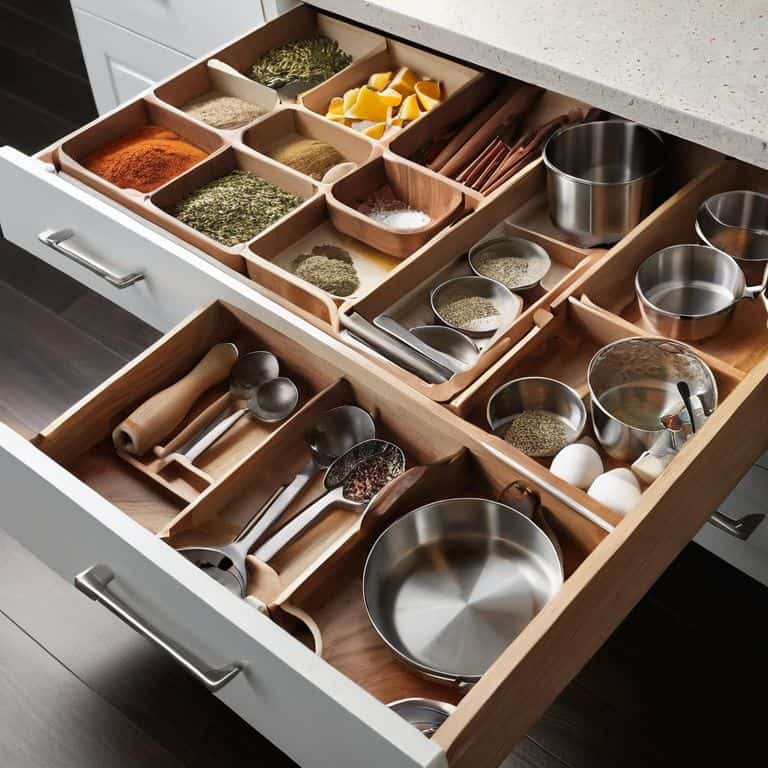
As I delve into solving kitchen drawer chaos, I’ve found that it’s all about creating a system that works for you. One of the most effective ways to achieve this is by implementing custom drawer organizer systems. These can be tailored to fit your specific needs, ensuring that every item has its designated spot. By doing so, you’ll be able to maximize your kitchen’s storage potential, even in the smallest of spaces.
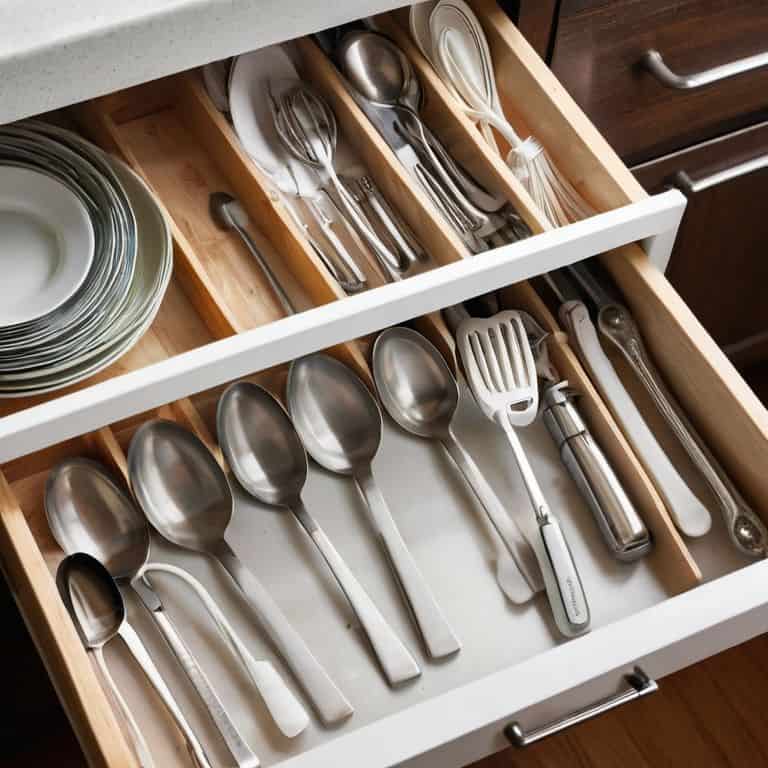
When it comes to kitchen utensil storage solutions, it’s essential to think outside the box. Consider using adjustable drawer dividers to separate your utensils into categories, making them easier to find and access. This simple hack can make a significant difference in the overall functionality of your kitchen. By decluttering kitchen cabinets and drawers, you’ll be able to focus on the task at hand, rather than wasting time searching for a specific item.
To take your kitchen drawer layout to the next level, explore kitchen drawer layout ideas that prioritize efficiency and accessibility. By grouping similar items together and designating a specific spot for each, you’ll be able to maintain a sense of order and maximizing small kitchen storage. Remember, the key to a well-organized kitchen is to create a system that is both logical and easy to follow, allowing you to cook and prepare meals with ease.
Decluttering With Adjustable Drawer Dividers
To take your kitchen drawer organization to the next level, I swear by adjustable drawer dividers. These simple yet genius tools allow you to create customized compartments for your utensils, spices, and cooking essentials. By dividing your drawers into separate sections, you can ensure that each item has its designated spot, making it easier to find what you need when you need it.
I’ve used adjustable dividers in my own tiny kitchen to separate my baking supplies from my cooking utensils, and it’s been a game-changer. No more rummaging through a cluttered drawer to find the pastry brush or the garlic press. With adjustable dividers, you can adjust the layout as your needs change, making it a flexible and efficient solution for any kitchen.
Maximizing Storage With Custom Organizers
To take my kitchen drawer organization to the next level, I’ve turned to custom organizers. I’ve designed and 3D printed my own dividers and trays, tailored to the specific items I use most often. This approach allows me to make the most of the available space, keeping frequently used utensils and gadgets within easy reach. By creating a custom fit for each item, I’ve eliminated clutter and reduced waste, making my kitchen workflow more efficient.
I’ve found that these custom organizers have been a game-changer in maintaining my kitchen’s overall organization. With everything in its designated place, I can focus on cooking and experimenting with new recipes, rather than wasting time searching for misplaced items. This attention to detail has also inspired me to apply similar principles to other areas of my kitchen, further optimizing my workflow and making the most of my tiny space.
5 Game-Changing Tips to Tame Your Kitchen Drawer Chaos
- Assign a Home for Each Item: Before you start organizing, take everything out of your kitchen drawers and categorize items into groups, like baking supplies, cooking utensils, and dinnerware
- Implement a ‘First In, First Out’ Rule: Ensure that your most frequently used items are front and center, while less frequently used items are stored towards the back or in harder-to-reach areas
- Utilize Vertical Space with Stackable Containers: Maximize your drawer’s vertical space by using stackable containers or trays to store items like spices, oils, or cleaning supplies
- Create a ‘Zone’ for Similar Items: Designate specific zones within your drawers for similar items, such as a ‘baking zone’ or a ‘cooking zone’, to make them easier to find and access
- Schedule Regular ‘Drawer Audits’ to Maintain Your Space: Set a reminder to regularly clean out and reorganize your kitchen drawers to prevent clutter from building up again and maintain your hard-earned sense of calm
Key Takeaways for a More Efficient Kitchen
By applying the principles of workflow optimization, you can transform your kitchen drawers from cluttered spaces into well-organized hubs that enhance your cooking experience
Custom organizers and adjustable drawer dividers are essential tools in maximizing storage and minimizing clutter, allowing you to find what you need quickly and easily
Implementing a ‘home for everything’ approach, where each item has a designated place, is crucial for maintaining the organization of your kitchen drawers and ensuring that your space remains efficient and stress-free
The Key to Kitchen Serenity
A well-organized kitchen drawer is not just about storing utensils, it’s about choreographing your cooking workflow – every spoon, every spatula, and every spice has a designated spot, and a deliberate path to get there.
Leo Vance
Putting it All Together: A More Efficient You
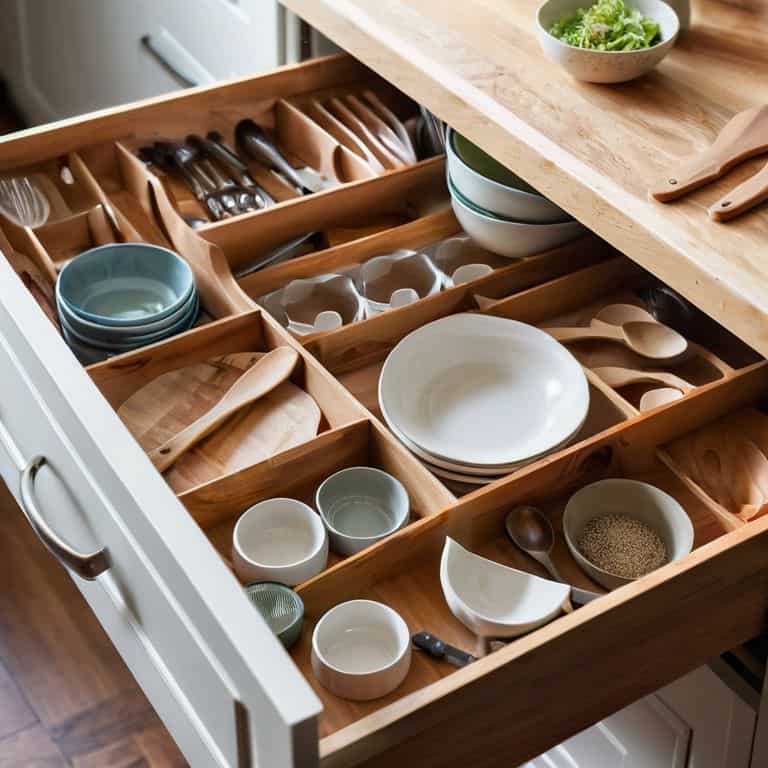
As we’ve worked through the process of organizing your kitchen drawers, you’ve seen how a few simple steps can make a big difference. From maximizing storage with custom organizers to decluttering with adjustable drawer dividers, each step has built on the last to create a system that works for you, not against you. By applying these principles, you’ll find that your kitchen workflow becomes more efficient, and you’ll have more time to focus on the things you enjoy, like cooking and sharing meals with loved ones.
So, as you finish up this project and step back to admire your handiwork, remember that it’s all about the process. The journey to a more organized kitchen is just as important as the destination. By embracing the principles of workflow optimization, you’ll not only have a more functional kitchen, but you’ll also develop a mindset that will serve you well in all areas of your life. Keep experimenting, keep optimizing, and most importantly, keep enjoying the journey to a more efficient, more organized you.
Frequently Asked Questions
What are some common mistakes to avoid when organizing kitchen drawers?
When organizing kitchen drawers, I’ve found that common mistakes include not measuring your space, using one-size-fits-all solutions, and neglecting to categorize items by frequency of use. Avoid these pitfalls by taking a tailored approach, and you’ll be on your way to a more efficient kitchen workflow.
How can I measure my kitchen drawers to ensure a custom organizer fits perfectly?
To measure your kitchen drawers, start by recording the length, width, and depth. Use a digital caliper for precise measurements, and don’t forget to account for any obstructions, like drawer stops or hinges. I like to create a simple diagram to visualize the space and plan my custom organizer’s design.
What types of items should I prioritize storing in easy-to-reach drawers versus harder-to-reach ones?
In my tiny kitchen, I prioritize storing frequently used items like utensils, knives, and spices in easy-to-reach drawers, while reserving harder-to-reach ones for less frequently used items like special occasion dishes or cooking gear. This workflow optimization helps me move efficiently while cooking.