I still remember the day I moved into my tiny apartment, staring down at the miniature kitchen and wondering how I’d ever make it work. The common wisdom was that a small kitchen meant a small menu, but I was determined to prove that a guide to small kitchen storage could be the key to unlocking a world of culinary possibilities. As a systems engineer, I saw the kitchen not as a limitation, but as a puzzle to be solved – and I was eager to get started.
As I dug into the world of tiny kitchen design, I realized that the biggest hurdle wasn’t the physical space itself, but rather the mental block that came with it. People often assume that a small kitchen means sacrificing functionality, but I’m here to tell you that’s just not true. In this article, I’ll share my own hard-won secrets for creating a functional and efficient kitchen, no matter how small the space. You’ll learn how to optimize your storage, streamline your workflow, and make the most of every inch – all without sacrificing style or functionality.
Table of Contents
- Guide Overview: What You'll Need
- Step-by-Step Instructions
- A Guide to Small Kitchen Storage
- 5 Essential Tips to Revolutionize Your Small Kitchen Storage
- Key Takeaways for a More Efficient Tiny Kitchen
- The Key to Kitchen Efficiency
- Conclusion: Unlocking Your Tiny Kitchen's Full Potential
- Frequently Asked Questions
Guide Overview: What You'll Need
Total Time: 2 hours 30 minutes
Estimated Cost: $50 – $100
Difficulty Level: Intermediate
Tools Required
- Drill (with screwdriver and drill bits)
- Tape Measure
- Level
- Hammer
- Utility Knife (with extra blades)
- Pencil and Marker
Supplies & Materials
- Shelves (various sizes)
- Storage Bins (plastic or wicker)
- Adhesive Hooks
- Magnetic Spice Strips
- 2-in x 4-in lumber (for custom shelving)
- Pegboard (for hanging utensils and tools)
- Wall Anchors (for securing shelves and hooks)
- Decorative Baskets (for storing dry goods)
Step-by-Step Instructions
- 1. First, let’s start by assessing your kitchen’s layout and identifying the areas that need the most improvement in terms of storage. Take a step back, and with a critical eye, observe how you move around your kitchen, where you tend to place items, and where congestion typically occurs. This initial observation will be crucial in determining the most effective storage solutions for your space.
- 2. Next, I want you to purge and declutter your kitchen. Get rid of any items you no longer need or use. This step is essential because it allows you to understand what you truly need to store. Be ruthless – if you haven’t used it in the past year, it’s likely you won’t miss it. This process will also give you a sense of what types of items you need to accommodate with your storage solutions.
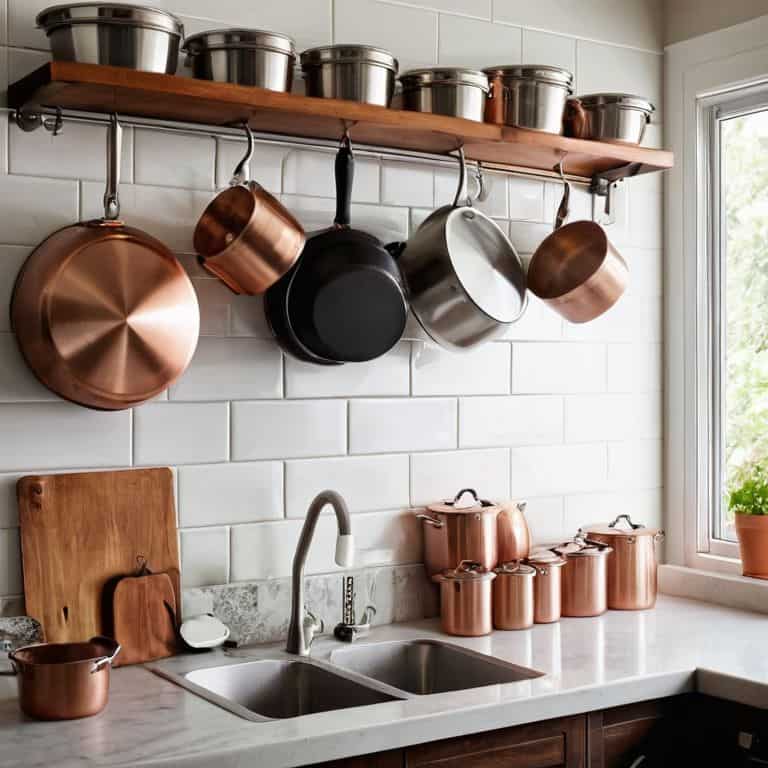
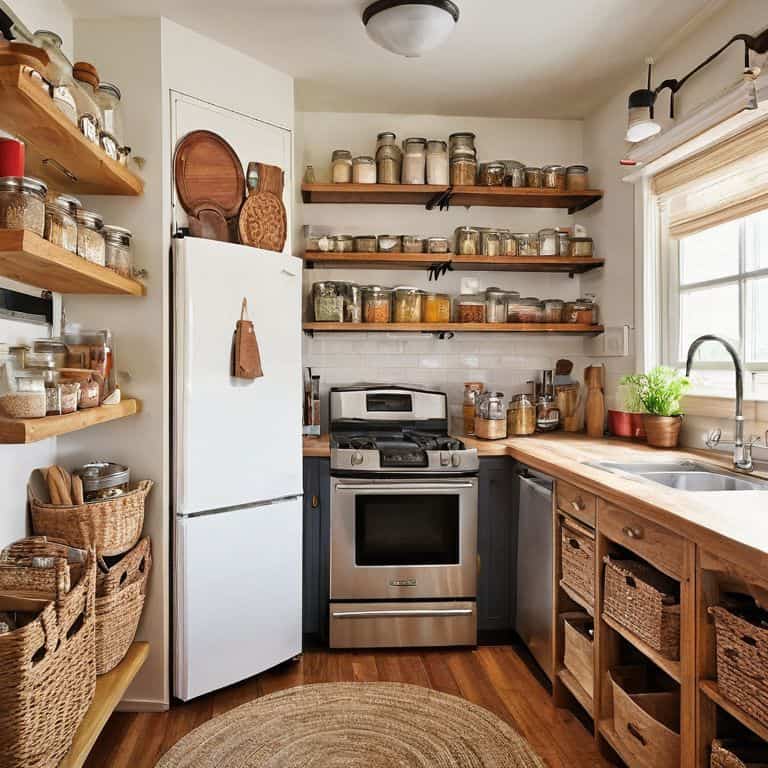
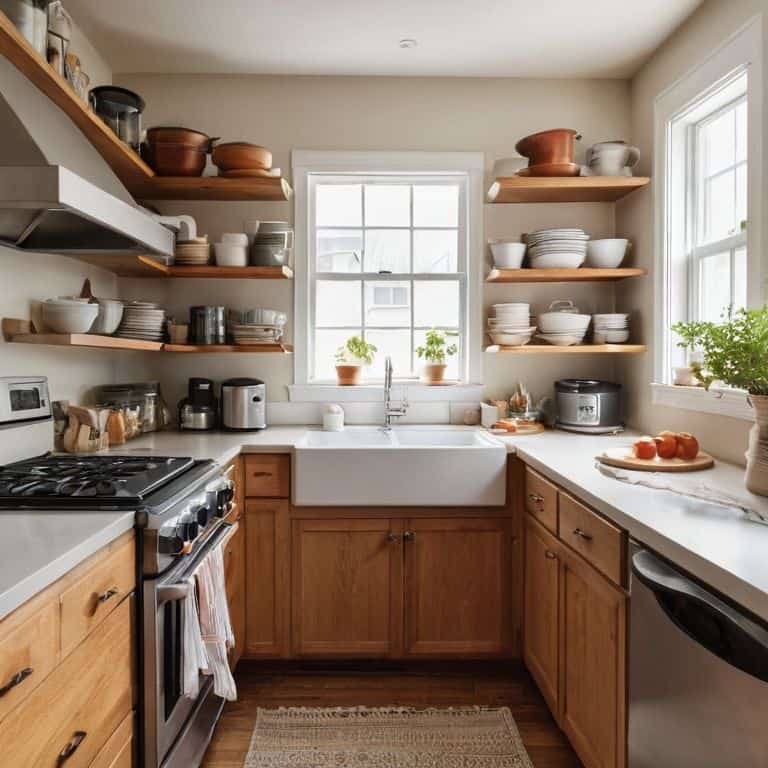
- 3. Now, let’s talk about maximizing your wall space. In a small kitchen, it’s crucial to use your walls efficiently. Consider installing shelves, hooks, or a pegboard for hanging items like pots, pans, utensils, and even spices. The key here is to keep frequently used items accessible while keeping less frequently used items out of the way but still organized.
- 4. The next step involves optimizing your cabinetry. Look into your cabinets and see how you can better utilize the space inside them. Consider using dividers, baskets, or pull-out drawers to organize your dishes, food, and cooking supplies. The goal is to ensure that every item has its designated place and can be easily retrieved when needed.
- 5. Another critical area to focus on is the countertop organization. Since counter space is often limited in small kitchens, it’s vital to keep it clear and clutter-free. Invest in a tray or a caddy for housing small items like oils, spices, or cleaning supplies. This will not only keep your countertops organized but also make cleaning easier.
- 6. Moving on to the often-overlooked areas, let’s consider utilizing the space under your shelves. You can use adhesive hooks, magnetic strips, or even install a secondary shelf to store less frequently used items or accessories. This space can be incredibly valuable for adding extra storage without cluttering your main work areas.
- 7. Finally, implement a maintenance routine to ensure your newly organized kitchen remains efficient and clutter-free. Set aside some time each week to tidy up, put things back in their designated places, and reassess your storage solutions as needed. This ongoing process will help you identify any new storage needs or inefficiencies in your system, allowing you to make adjustments and continue optimizing your kitchen’s workflow.
A Guide to Small Kitchen Storage
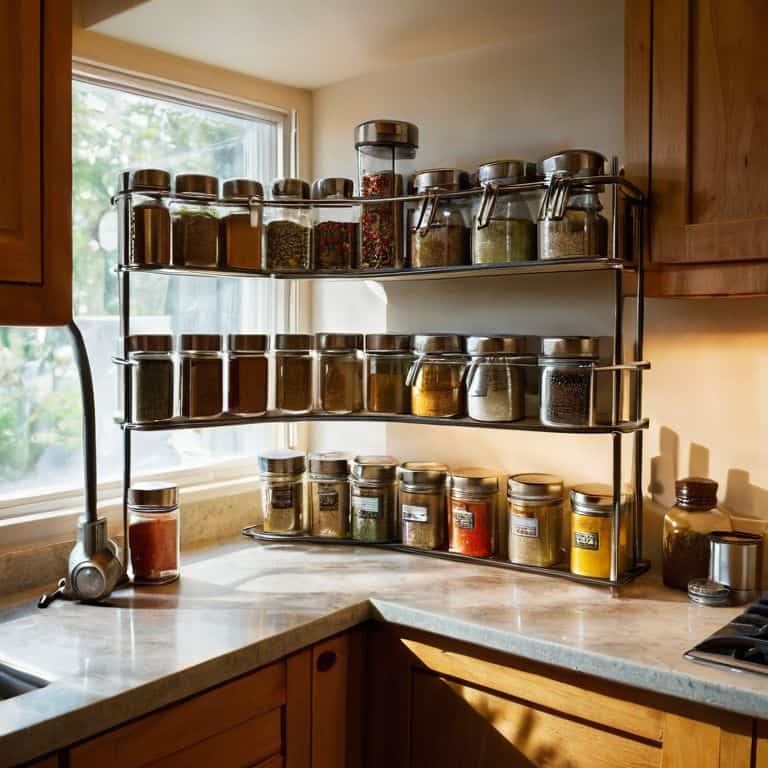
As I continued to optimize my tiny kitchen, I realized that maximizing kitchen corner space was crucial to its overall efficiency. By installing a custom carousel in the corner, I was able to store frequently used spices and oils, keeping them easily accessible while cooking. This simple addition has streamlined my workflow, allowing me to focus on the recipe at hand.
When it comes to cabinet organization, I’m a big fan of optimal cabinet organization systems. By using dividers and baskets, I’ve been able to categorize and store my kitchen essentials in a logical and space-saving manner. This has not only reduced clutter but also made it easier to find what I need when I need it. Whether you’re a fan of DIY projects or prefer store-bought solutions, investing in a well-planned cabinet organization system is sure to pay off in the long run.
In my quest for the ultimate tiny kitchen, I’ve also experimented with hidden kitchen storage solutions. From sliding drawers to retractable shelves, these clever designs have allowed me to stash away infrequently used items, keeping my countertops clutter-free and my kitchen feeling more spacious. By incorporating a few of these innovative storage ideas into your own kitchen, you’ll be amazed at how much more functional and enjoyable your cooking space becomes.
Maximizing Kitchen Corner Space
Maximizing Kitchen Corner Space
When it comes to small kitchens, corner space is often the most underutilized area. To make the most of it, I recommend using a lazy Susan or a carousel. This simple addition can turn a dead corner into a functional storage hub. By placing frequently used items like spices, oils, or cleaning supplies on the lazy Susan, you can easily access them without having to navigate through tight spaces.
I’ve also found that custom 3D-printed corner inserts can be a game-changer. These inserts can be tailored to fit your specific needs, providing a snug fit for items like kitchen utensils, jars, or even a stand-alone trash can. By optimizing your corner space, you’ll be amazed at how much more efficient your kitchen workflow becomes.
Optimal Cabinet Organization Systems
To achieve optimal cabinet organization, I swear by the “zone defense” approach. Divide your cabinets into zones based on frequency of use and categorize items accordingly. For instance, a “baking zone” can store flour, sugar, and baking powder, while a “cooking zone” can hold oils, spices, and commonly used condiments. This streamlined approach ensures that the items you need are always within easy reach, reducing clutter and saving you time.
Within each zone, I recommend using adjustable shelves, baskets, or dividers to maximize vertical space and keep items neatly compartmentalized. This not only prevents items from getting lost or damaged but also makes the most of your cabinet’s often-wasted corners and vertical real estate. By implementing this system, you’ll be amazed at how much more efficient your kitchen workflow becomes.
5 Essential Tips to Revolutionize Your Small Kitchen Storage
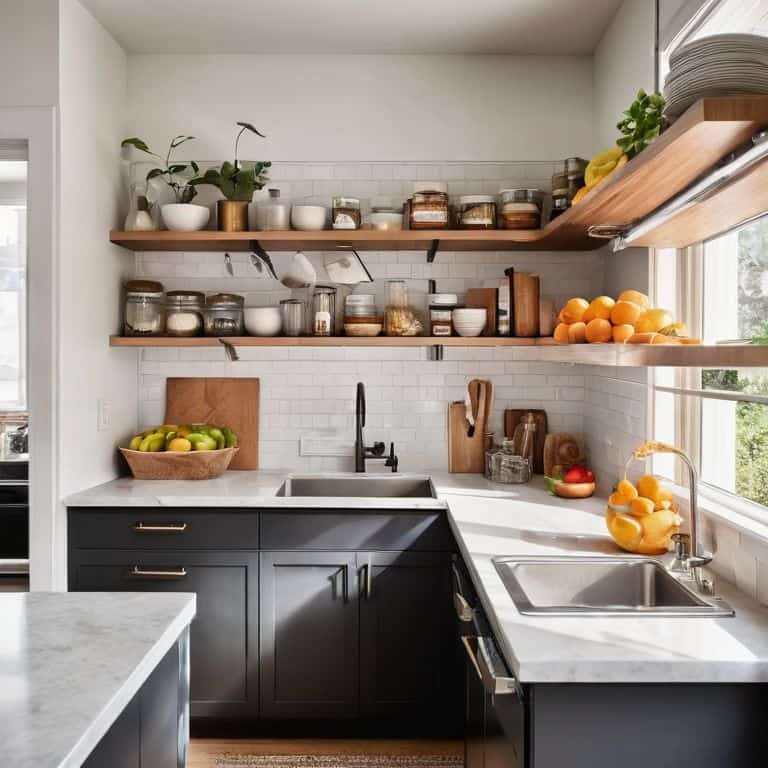
- Designate a Home for Each Item: Assign a specific spot for each kitchen tool and ingredient to maintain a clutter-free environment and optimize workflow
- Utilize Vertical Space: Install wall-mounted shelves, hooks, or a pegboard to maximize storage capacity and keep frequently used items within easy reach
- Choose Multifunctional Storage Containers: Select containers that serve multiple purposes, such as a spice rack with a built-in oil dispenser, to reduce clutter and increase efficiency
- Implement a ‘First In, First Out’ System: Organize your pantry and storage areas to ensure older items are consumed before they expire, reducing waste and saving you money
- Leverage the Dead Space: Make the most of often-wasted areas like the space above your cabinets, inside doors, or under the sink by using custom storage solutions or adhesive hooks to hang items
Key Takeaways for a More Efficient Tiny Kitchen
I’ve learned that with a few clever storage hacks and a focus on workflow optimization, even the smallest kitchens can become incredibly functional and enjoyable to cook in
By applying principles of efficient design, such as maximizing corner space and implementing optimal cabinet organization systems, you can significantly reduce stress and increase productivity in your tiny kitchen
Remember, the goal is to make every movement in your kitchen have a purpose – with the right systems in place, you can turn your tiny kitchen into a powerhouse that makes cooking easier and more enjoyable than you ever thought possible
The Key to Kitchen Efficiency
A tiny kitchen isn’t about having less space, it’s about using the space you have more intelligently – and that starts with a solid storage strategy.
Leo Vance
Conclusion: Unlocking Your Tiny Kitchen's Full Potential
As we’ve explored throughout this guide, maximizing storage in a small kitchen is all about cleverly utilizing every available space. From optimizing cabinet organization systems to leveraging often-wasted corner areas, each strategy plays a crucial role in transforming your tiny kitchen into a workflow powerhouse. By implementing these steps and maintaining a mindset focused on efficiency and purpose, you’ll find that your small kitchen not only becomes more manageable but actually starts to feel spacious and inviting.
The true magic happens when you start to view your tiny kitchen not as a constraint, but as an opportunity to apply creative problem-solving and precision engineering principles. As you embark on this journey, remember that it’s not just about storage solutions or kitchen gadgets—it’s about crafting a space that harmoniously blends function and aesthetics, reflecting your unique personality and cooking style. So, don’t be afraid to experiment, innovate, and most importantly, enjoy the process of turning your tiny kitchen into a haven that inspires culinary creativity and warmth.
Frequently Asked Questions
How can I determine the most efficient storage solutions for my specific tiny kitchen layout?
To determine the most efficient storage solutions, I recommend creating a ‘time and motion’ study of your kitchen workflow. Map out your cooking routines, then identify areas where storage can streamline your process. Consider the ‘work triangle’ between your sink, stove, and fridge – optimizing storage near these hubs can significantly boost efficiency.
What are some creative ways to utilize the space above my kitchen cabinets for storage?
I love leveraging the often-wasted space above kitchen cabinets. Consider installing a pegboard for hanging infrequently used items like special occasion dishes or cookbooks. Alternatively, add a crown molding shelf for storing decorative items or linens, keeping them dust-free and out of the way.
Are there any adjustable or modular storage systems that can be easily installed in a small kitchen to maximize flexibility?
I’m a big fan of adjustable shelving and modular storage units. They’re perfect for small kitchens, as they can be tailored to fit your specific needs. I recommend installing a pegboard system or a modular cabinet organizer, which can be easily rearranged as your storage needs change. This will help keep your kitchen clutter-free and make the most of your available space.