I still remember the day I realized that a tiny kitchen didn’t have to mean a tiny pantry. I was struggling to find space for all my essentials, and that’s when I stumbled upon a guide to using a rolling cart as a pantry. It was a game-changer. I mean, who needs a huge kitchen when you can have a cleverly designed rolling cart that keeps everything within arm’s reach? The common myth that you need a lot of space for a functional pantry is just that – a myth. With a little creativity and the right mindset, you can turn even the smallest of spaces into a kitchen powerhouse.
In this article, I’ll share my personal experience and expertise on how to transform a rolling cart into a fully functional pantry. You’ll get practical tips on how to choose the right cart, optimize your storage space, and create a workflow that makes cooking and meal prep a breeze. I’ll cut through the clutter and give you honest, no-hype advice on how to make the most of your tiny kitchen. By the end of this guide, you’ll be equipped with the knowledge and confidence to create a pantry that’s not only functional but also beautifully organized. So, let’s get started and turn your rolling cart into a pantry that will make your cooking life easier and more enjoyable!
Table of Contents
Guide Overview: What You'll Need
Total Time: 2 hours 30 minutes
Estimated Cost: $50 – $100
Difficulty Level: Intermediate
Tools Required
- Tape Measure for measuring the space and cart
- Level to ensure the cart is properly aligned
- Drill with screwdriver and drill bits
- Wrench for assembling the cart if necessary
- Pencil and Marker for marking the walls and cart
Supplies & Materials
- Rolling Cart with multiple shelves and drawers
- Wood Shelves optional for additional storage
- Baskets and Containers for organizing pantry items
- Wall Anchors for securing the cart to the wall
- Screws for assembling the cart and attaching shelves
Step-by-Step Instructions
- 1. First, assess your kitchen layout to determine the ideal location for your rolling cart pantry. Consider the workflow of your kitchen, including the paths you take most frequently and the areas where you spend the most time. For me, it’s all about minimizing unnecessary movement, so I placed my cart near the cooking station.
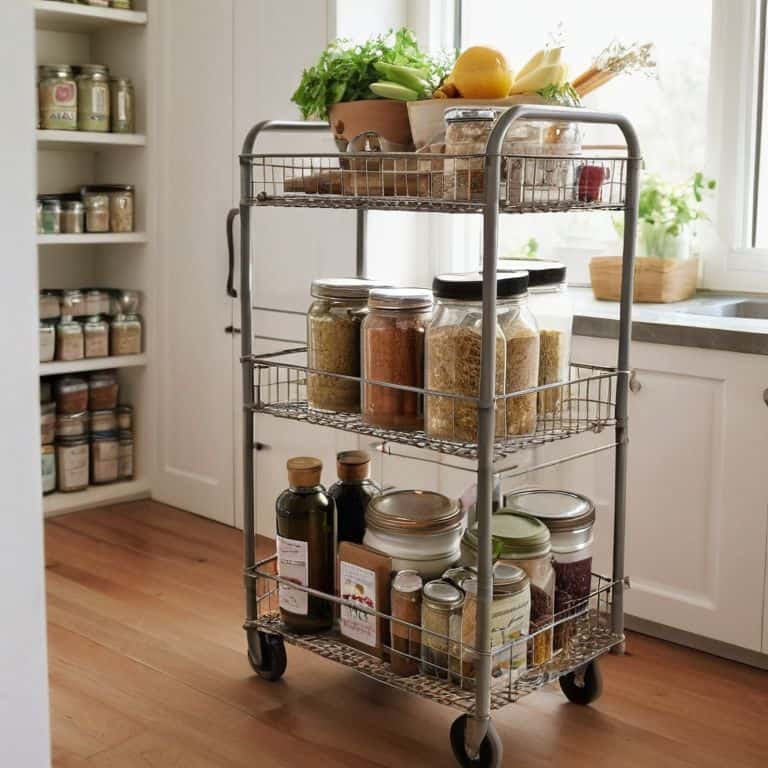
- 2. Next, choose a rolling cart that fits your needs and available space. I’m a fan of compact and versatile designs, as they can be easily maneuvered and tucked away when not in use. Look for a cart with multiple tiers and compartments to maximize storage capacity.
- 3. Now it’s time to purge and categorize your pantry items. Get rid of any expired or unused food, and group similar items together (e.g., grains, canned goods, baking supplies). This will help you make the most of your cart’s storage space and ensure that everything has a designated home.
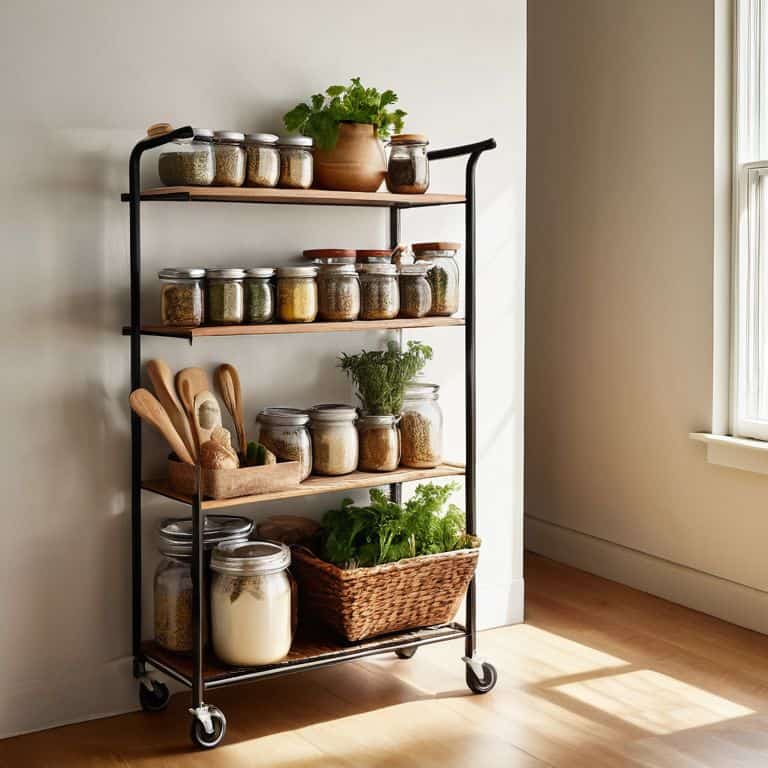
- 4. Once you’ve purged and categorized your pantry items, it’s time to assign a home for each group. Use the top tier of your cart for frequently used items, such as olive oil, spices, and coffee. Reserve the lower tiers for less frequently used items, like special occasion dishes or cooking utensils. Remember, the key is to optimize your workflow.
- 5. To make the most of your cart’s storage capacity, consider adding custom storage solutions. I’m a fan of 3D printing custom inserts and dividers to keep items organized and easy to access. You can also use baskets, bins, or other containers to corral small items and keep them from getting lost.
- 6. With your cart fully stocked and organized, it’s time to implement a maintenance routine. Set aside a few minutes each week to tidy up your cart, check expiration dates, and restock as needed. This will help you stay on top of your pantry game and ensure that your rolling cart remains a valuable asset in your kitchen.
- 7. Finally, don’t be afraid to experiment and adjust your rolling cart pantry as needed. As you use your cart, you may find that certain items are more convenient to store in different locations or that you need to adjust your categorization system. Remember, the goal is to create a system that works for you, so don’t be afraid to try new things and make adjustments on the fly.
A Guide to Rolling Cart Pantry
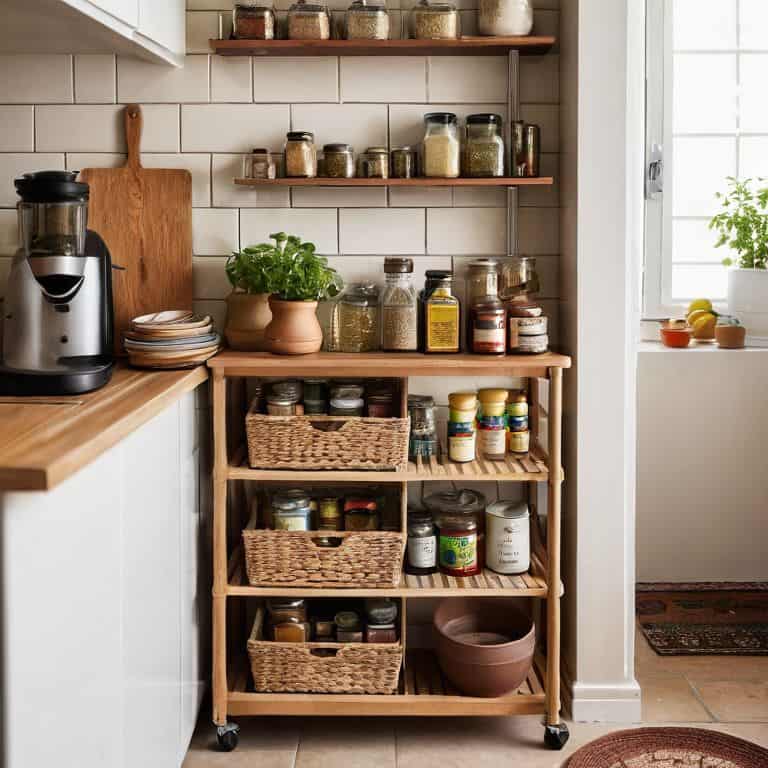
As I continue to optimize my own tiny kitchen, I’ve discovered that maximizing kitchen storage space is all about creativity and resourcefulness. One of my favorite hacks is to use a rolling cart as a pantry, and then take it to the next level with clever decoration ideas. For example, I like to add a few small baskets to store spices, oils, and other essentials, keeping them within easy reach.
When it comes to cart organization systems, I’m a big fan of using portable pantry solutions that can be easily moved or rearranged as needed. This allows me to experiment with different layouts and find the one that works best for my specific kitchen workflow. By implementing a few simple organization systems, I’ve been able to transform my rolling cart into a kitchen powerhouse, capable of storing everything from snacks to cooking supplies.
To take your rolling cart pantry to the next level, consider incorporating some apartment kitchen design tips, such as using vertical space to store infrequently used items or adding a small tray or shelf to keep frequently used items within easy reach. By applying these principles, you can create a highly functional and efficient pantry that makes the most of your available space, and helps you cook with ease and confidence.
Maximizing Storage With Cart Hacks
To take your rolling cart pantry to the next level, I recommend implementing a few key hacks. First, consider adding adjustable shelves or baskets to maximize vertical storage space. This will allow you to store items of varying sizes, from spices and oils to canned goods and kitchen gadgets. By customizing your cart’s storage capacity, you can ensure that every item has a designated home, making it easier to find what you need when you need it.
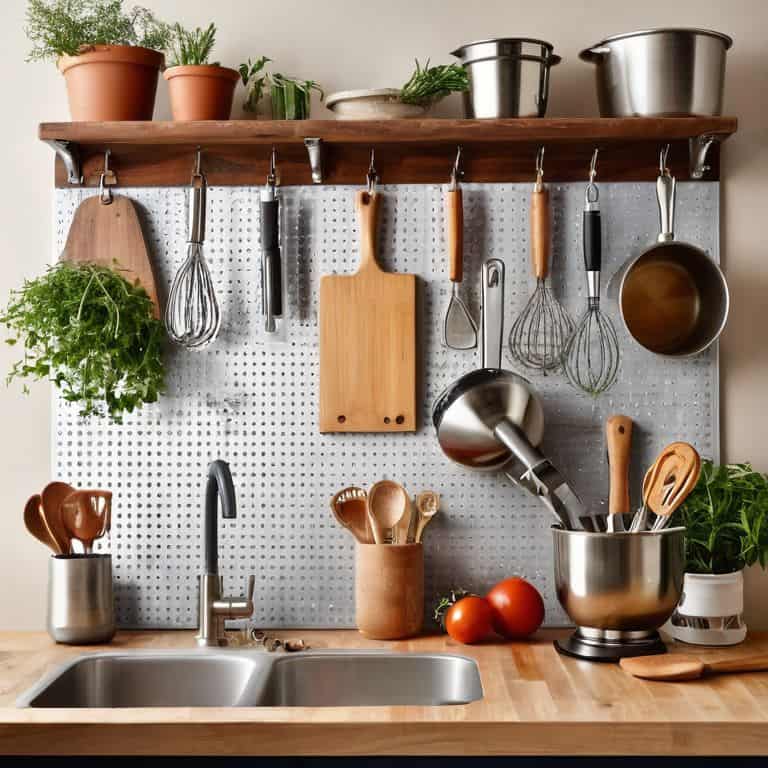
I also suggest incorporating a pegboard or hooks on the side of the cart for hanging frequently used items like utensils, pot lids, or oven mitts. This not only keeps these items within easy reach but also frees up valuable shelf space for other essentials. By applying these simple yet effective hacks, you can transform your rolling cart into a highly functional and efficient pantry that streamlines your cooking workflow.
Portable Pantry Solutions for Small Kitchens
As I’ve experimented with various portable pantry solutions, I’ve found that a well-organized rolling cart can be a total game-changer for small kitchens. By assigning a specific spot for each item, you can ensure that your essentials are always within arm’s reach. I’m a big fan of using baskets, bins, and dividers to separate and store items like spices, oils, and snacks. This not only keeps your cart tidy but also makes it easier to find what you need when you need it.
I’ve also discovered that the key to a successful portable pantry is to keep it lightweight and mobile. Look for a cart with sturdy wheels and a compact design that can fit into tight spaces. This will allow you to easily move your pantry to wherever you need it, whether that’s to a different part of the kitchen or even outdoors for a backyard BBQ.
Pantry Power: 5 Key Tips for Rolling Cart Domination
- I always start by purging my kitchen of unnecessary items before assigning a home on my rolling cart pantry
- Assigning a theme to each shelf, like baking or cooking essentials, helps maintain organization and reduces decision fatigue
- Using stackable containers and baskets to store dry goods not only saves space but also keeps them fresh and pest-free
- Incorporating a spice rack or a magnetic strip for spices and oils maximizes vertical space and keeps them within easy reach
- Labeling each shelf and container has been a game-changer for me – it saves time and ensures that my kitchen workflow remains efficient and stress-free
Key Takeaways for a Rolling Cart Pantry
I’ve found that repurposing a rolling cart as a pantry is a total game-changer for keeping essentials within arm’s reach, and with a few simple hacks, you can maximize your storage and workflow
By applying a few key principles of workflow optimization, such as the ‘time and motion’ study I use in my own kitchen, you can turn your rolling cart pantry into a highly efficient and portable storage solution
Whether you’re a fellow tiny kitchen enthusiast or just looking to streamline your cooking process, the rolling cart pantry hack is a simple yet powerful tool for taking your kitchen organization to the next level and making the most of your small space
Pantry Wisdom
A rolling cart pantry is not just a storage solution, it’s a workflow revolution – by putting your most-used ingredients and tools within arm’s reach, you’re not just saving space, you’re saving time and unlocking a more efficient you.
Leo Vance
Unlocking the Full Potential of Your Tiny Kitchen
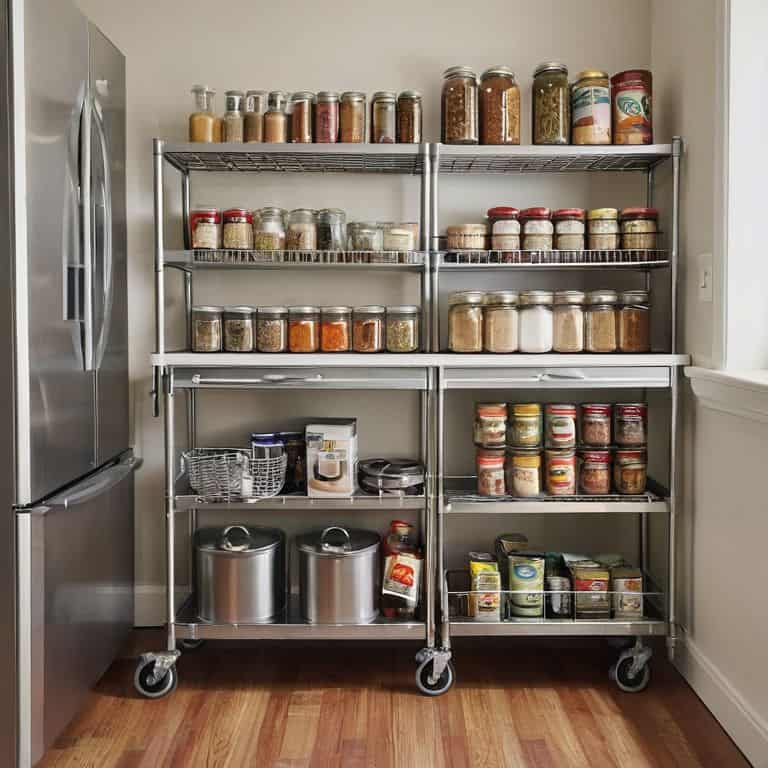
As we’ve explored throughout this guide, using a rolling cart as a pantry is a simple yet effective way to maximize storage and optimize your kitchen’s workflow. By implementing the step-by-step instructions and clever hacks outlined in this article, you’ll be well on your way to creating a more efficient and functional cooking space. Whether you’re a seasoned chef or a culinary newbie, the key to success lies in streamlining your processes and making the most of the space you have available. By applying these principles, you’ll be amazed at how much more you can accomplish in your tiny kitchen.
So, the next time you’re tempted to view your tiny kitchen as a limitation, remember that it’s actually an opportunity to get creative and think outside the box. By embracing the challenge and applying a little ingenuity, you can turn even the smallest of spaces into a culinary powerhouse. As someone who’s passionate about tiny kitchen design, I’m excited to see how you’ll choose to optimize your own space and make it work for you. Happy cooking, and don’t forget to have fun along the way!
Frequently Asked Questions
What are the best dimensions for a rolling cart to fit in a small kitchen and still provide ample storage?
For a small kitchen, I recommend a rolling cart with dimensions around 24-30 inches tall, 18-24 inches wide, and 12-18 inches deep. This size provides ample storage without overwhelming the space, and can fit neatly into most tight kitchen areas, keeping your essentials within easy reach.
How can I organize my rolling cart pantry to ensure easy access to frequently used items?
To optimize your rolling cart pantry, I recommend categorizing items into zones, like baking supplies or spices, and assigning a home for each using baskets or bins. This workflow hack ensures frequently used items are front and center, making cooking a breeze in your tiny kitchen.
Are there any specific materials or features I should look for when selecting a rolling cart to use as a pantry in my tiny kitchen?
When choosing a rolling cart, I look for durable materials like stainless steel or sturdy wood, and features like adjustable shelves, a sturdy frame, and smooth-rolling wheels – these will help you maximize storage and workflow in your tiny kitchen.