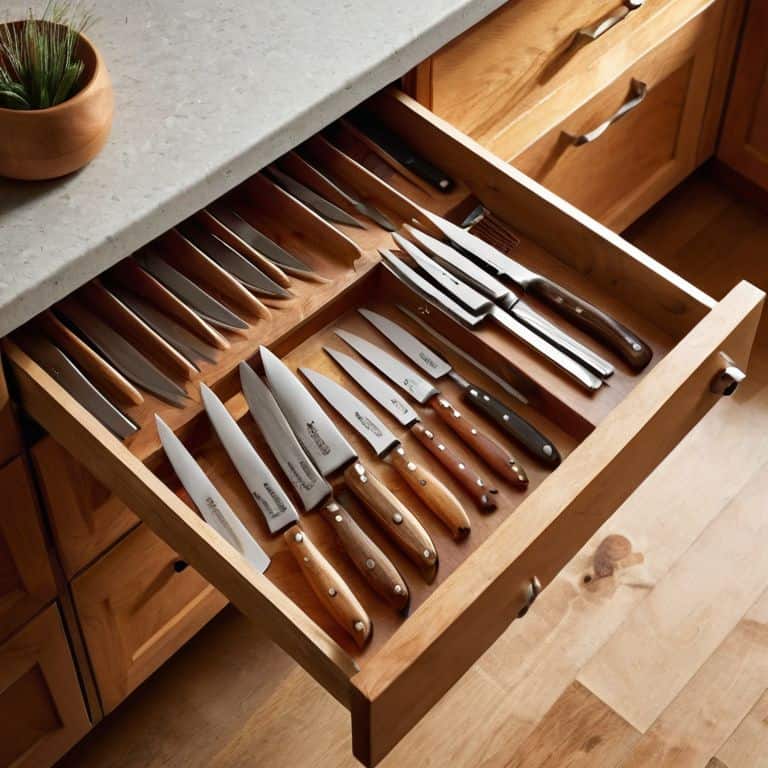
I still remember the chaos of my sailboat kitchen, where a cluttered knife drawer could quickly turn into a safety hazard. That’s when I learned the importance of how to organize knives in a drawer safely. It’s a task that’s often overlooked, but trust me, it’s a game-changer. A tidy knife drawer is not just about aesthetics; it’s about creating a calm and efficient cooking space that makes meal prep a joy, not a stress-inducing activity.
In this article, I’ll share my favorite hacks for taming the knife drawer chaos. You’ll learn how to assess your current setup, choose the right storage solutions, and implement a maintenance routine that keeps your knives sharp and within reach. By the end of this guide, you’ll have a clear plan to transform your knife drawer into a functional and peaceful space that makes cooking easier and safer. Whether you’re a seasoned chef or a culinary newbie, these practical tips will help you master the art of knife organization and take your kitchen to the next level.
Table of Contents
Guide Overview: What You'll Need
Total Time: 1 hour 15 minutes
Estimated Cost: $15 – $30
Difficulty Level: Easy
Tools Required
- Tape Measure for measuring the drawer
- Level for ensuring the organizer is straight
- Pencil for marking the drawer
- Utility Knife (with extra blades)
Supplies & Materials
- Wooden Inserts or Dividers for separating knives
- Adhesive-Backed Hook and Loop Strips for securing the inserts
- 6 inches by 2 inches lumber for creating custom dividers if needed
- Non-Slip Mat for lining the drawer to prevent slipping
Step-by-Step Instructions
- 1. First, let’s start by emptying the drawer completely. This will give us a clean slate to work with and help us decide what we want to keep, what we can donate, and what’s ready for the recycling bin. Take everything out, including the knives, utensils, and any other items that may have accumulated in the drawer over time.
- 2. Next, we need to sort and categorize the items we’ve removed from the drawer. Separate the knives from the other utensils and group similar items together. This will make it easier to decide how to store them and ensure that we’re making the most of our available space.
- 3. Now it’s time to clean the drawer itself. Give it a good wipe down with a damp cloth to remove any dust, dirt, or food residue that may have built up. This will help prevent any bacterial growth and keep our knives and utensils clean and hygienic.
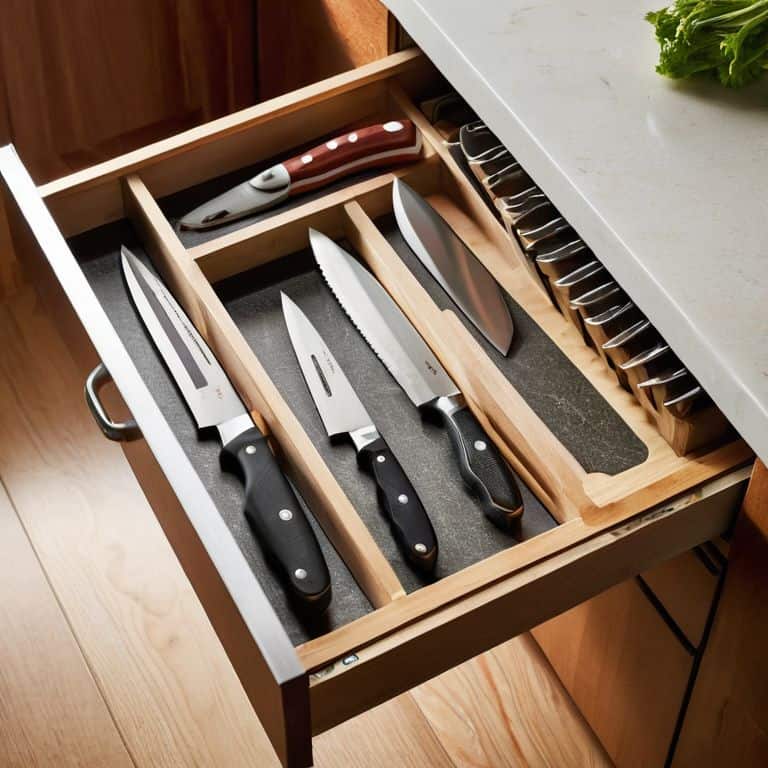
- 4. With our drawer clean and our items sorted, it’s time to think about storage solutions. Consider investing in a knife organizer or divider to keep our knives separate from other utensils and prevent them from getting damaged or causing accidents. We can also use small baskets or containers to store other items like utensils, spices, or cooking supplies.
- 5. Once we have our storage solutions in place, it’s time to assign a home for each item. Decide where each knife and utensil will be stored and make sure it’s easy to access and put away. We want to create a system that’s easy to maintain and encourages us to put things back in their place after use.
- 6. To add an extra layer of safety and prevent accidents, consider installing a knife guard or a small ledge at the back of the drawer to prevent knives from slipping towards the front. We can also use magnetic strips or adhesive hooks to store our knives on the side of the drawer or on a nearby wall, keeping them out of reach of children and pets.
- 7. Finally, let’s talk about maintenance and upkeep. To keep our knife drawer organized and safe, we need to make sure we’re regularly cleaning and checking our storage solutions. Set aside some time each week to wipe down the drawer, check for any damage or wear, and make sure everything is still in its assigned place. By following these simple steps, we can create a knife drawer that’s not only safe and efficient but also a joy to use.
Sailing Into Safe Knife Storage
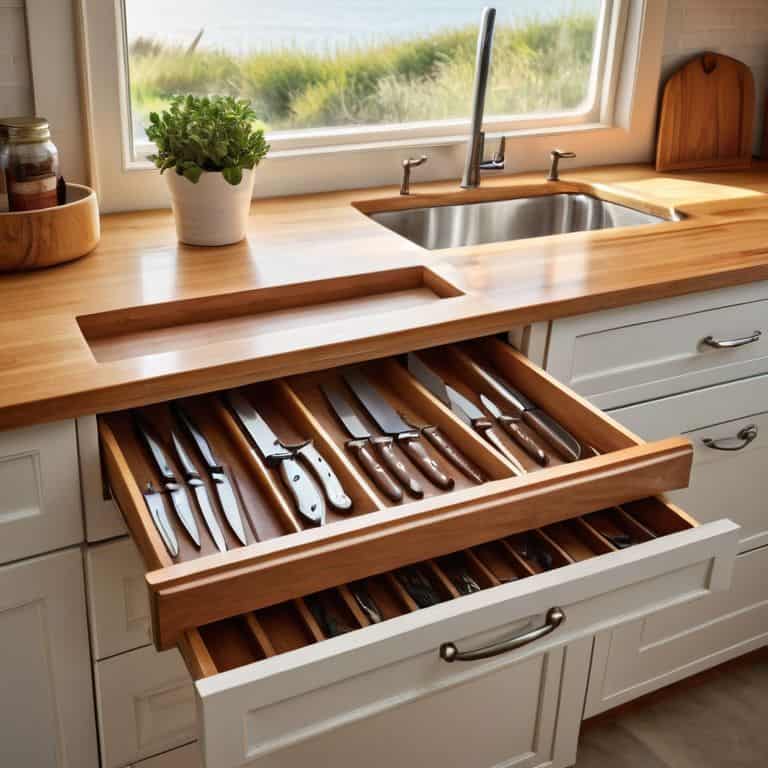
As I reflect on my time living on a sailboat, I realize that safe knife storage solutions were crucial in our tiny kitchen. We had to be creative with our space, and that’s where I discovered the beauty of _custom knife drawer inserts_. These inserts allowed us to maximize our drawer space while keeping our knives organized and within reach.
In small kitchens, it’s essential to consider _knife block alternatives_ that won’t take up too much counter space. That’s why I’m a big fan of drawer organizer systems for knives. These systems can be tailored to fit your specific needs, ensuring that your knives are stored safely and efficiently. By utilizing the often-wasted vertical space in your drawers, you can create a more harmonious kitchen environment.
When it comes to _maximizing drawer space for knives_, it’s all about finding the right balance between accessibility and safety. I’ve found that implementing a few simple knife organization ideas for small kitchens can make a significant difference. For instance, using magnets or hooks to store frequently used knives can help free up space in your drawers, creating a more streamlined cooking experience.
Maximizing Space With Safe Knife Block Alternatives
As I explored alternative storage solutions, I discovered that safe knife block alternatives can be a game-changer. On my sailboat, every inch counted, and traditional knife blocks often took up valuable counter space. I opted for magnetic strips on the side of my cabinets, where I could store my knives within easy reach. This not only freed up counter space but also added a touch of industrial chic to my kitchen.
For those looking to maximize space, I recommend considering in-drawer knife organizers or wall-mounted knife racks. These clever solutions keep your knives safe, sharp, and easily accessible, all while maintaining a clutter-free countertop. By thinking outside the traditional knife block, you can create a more efficient and peaceful kitchen environment that’s perfect for cooking up a storm.
Taming the Knife Drawer With Custom Inserts
When I lived on my sailboat, I learned to appreciate the beauty of custom inserts. They helped me make the most of the limited space, and now I use them in my kitchen to tame the knife drawer chaos. By creating a tailored fit for each knife, I can ensure they’re stored safely and efficiently. It’s amazing how a simple, custom insert can transform a cluttered drawer into a peaceful haven.
I love designing and building my own inserts using minimalist materials like wood or bamboo. It’s a fun project that adds a personal touch to my kitchen. With custom inserts, I can assign a home for each knife, keeping them organized and within reach. It’s a small detail that makes a big difference in my daily routine, and I’m excited to share this hack with you to bring some calm to your kitchen as well.
5 Sharp Tips for a Safe and Organized Knife Drawer
- Assign a Home for Each Knife: Designate a specific slot or section for each type of knife to prevent overcrowding and make them easier to find
- Choose the Right Materials: Opt for drawer inserts or dividers made from durable, easy-to-clean materials like wood or plastic to maintain a hygienic environment
- Implement a ‘Clean as You Go’ Policy: Establish a habit of wiping down knives and the drawer after each use to prevent the accumulation of food residue and moisture
- Utilize Vertical Space: Consider installing a magnetic knife strip or a pegboard on the side or back of the drawer to maximize storage capacity and keep knives at a safe distance from other utensils
- Maintain the ‘One-In, One-Out’ Rule: Regularly assess your knife collection and remove or replace any duplicates, damaged, or unnecessary knives to prevent clutter and ensure a safe, organized drawer
3 Key Takeaways for a Safely Organized Knife Drawer
By implementing a custom insert or divider system, you can transform your knife drawer into a safe and efficient space that prevents accidents and saves you time in the long run
Exploring alternative storage options like magnetic strips or wall-mounted knife blocks can help maximize your kitchen’s vertical space, keeping your countertops clutter-free and your knives within easy reach
Remember, a well-organized knife drawer is just the starting point – maintaining your space with simple habits like cleaning as you go and adhering to a ‘one-in, one-out’ rule can help you keep your kitchen peaceful and functional for years to come
Safety in Simplicity
A safe knife drawer is not just about storing blades, it’s about creating a harmony of function and calm in the heart of your home – where every morning begins.
Miles Corbin
Safely Sailing into a More Organized Kitchen
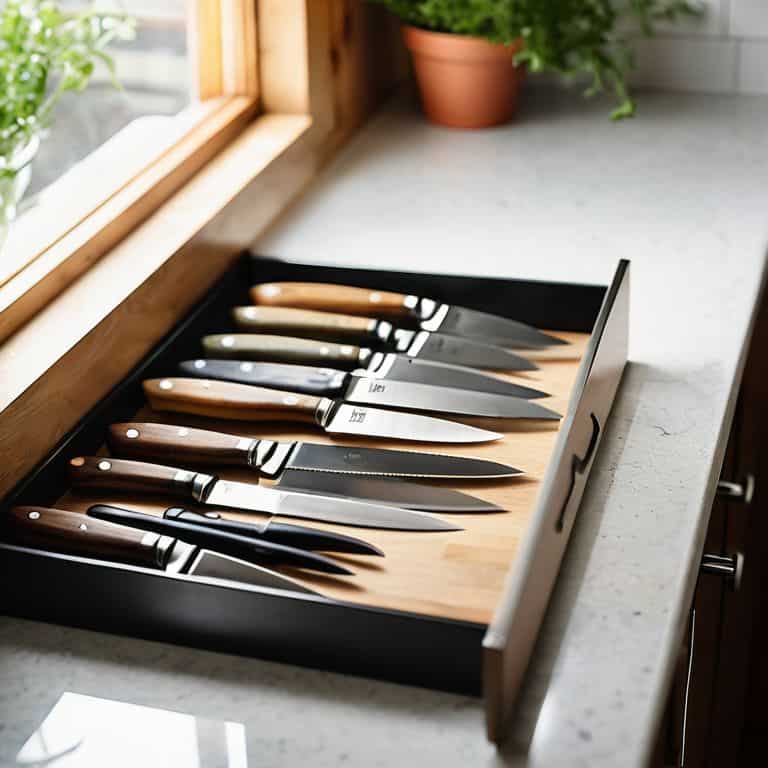
As we’ve navigated the world of knife storage together, I hope you’ve picked up some valuable tips to make your kitchen a safer, more efficient space. From custom inserts to safe knife block alternatives, we’ve explored the best ways to tame the chaos of your knife drawer. By implementing these solutions, you’ll not only be protecting yourself and your loved ones from accidents, but also creating a more peaceful cooking environment. Remember, a well-organized kitchen is a form of self-care, and it’s amazing how a few simple changes can make a big difference.
So, as you embark on your own kitchen organization journey, I want to leave you with a final thought: every small change adds up. Don’t be overwhelmed by the task of organizing your entire kitchen at once. Start with one area, like your knife drawer, and work your way up. With patience and persistence, you can create a kitchen that’s not only safe and functional, but also a joy to be in. Happy organizing, and I’ll see you on the next adventure in small space design!
Frequently Asked Questions
What are some common mistakes to avoid when organizing knives in a drawer to ensure safety?
When organizing knives in a drawer, beware of overcrowding and loose blades. Avoid mixing knives with other utensils, and never store them without a protective guard or sheath. These mistakes can lead to accidents and injuries, so it’s crucial to prioritize a safe and intentional storage system.
How can I measure my drawer to choose the right custom insert for my knives?
To measure your drawer for a custom insert, simply grab a ruler or tape measure and record the length, width, and height. Don’t forget to account for any obstacles like drawer slides or handles. I like to snap a quick photo of my measurements to reference later – it’s a simple trick that saves me from pesky mismeasures.
Are there any specific materials or features I should look for in a knife block alternative to maximize safety and efficiency?
When it comes to knife block alternatives, I swear by materials like bamboo or sustainable wood, and features like non-slip bases and individual knife slots for secure storage. These elements not only maximize safety but also keep your countertops clutter-free and your knives within easy reach.