I still remember the night I had to get creative with last night’s Chinese takeout in my tiny kitchen. It was a messy affair, with containers stacked haphazardly in the fridge, and the dreaded “science experiment” looming in the back. But that’s when it hit me – learning how to properly store leftover food to reduce waste wasn’t just about being efficient, it was about living a more mindful, community-focused lifestyle. As someone who’s passionate about exploring neighborhoods on foot and hosting board game nights in my small apartment, I’ve come to realize that a small home can actually be a catalyst for a bigger life.
In this article, I’ll share my personal story of how I transformed my approach to food storage, and provide you with practical tips on how to properly store leftover food to reduce waste. You’ll learn how to use airtight containers to keep your food fresh, and your space clutter-free. I’ll also show you how to implement a simple system for labeling and dating your leftovers, so you can easily keep track of what you have and what you can use. By the end of this guide, you’ll be equipped with the knowledge and skills to reduce food waste, save money, and live a more sustainable lifestyle – all from the comfort of your own tiny kitchen command center.
Table of Contents
Guide Overview: What You'll Need
Total Time: 30 minutes to 1 hour
Estimated Cost: $10 – $20
Difficulty Level: Easy
Tools Required
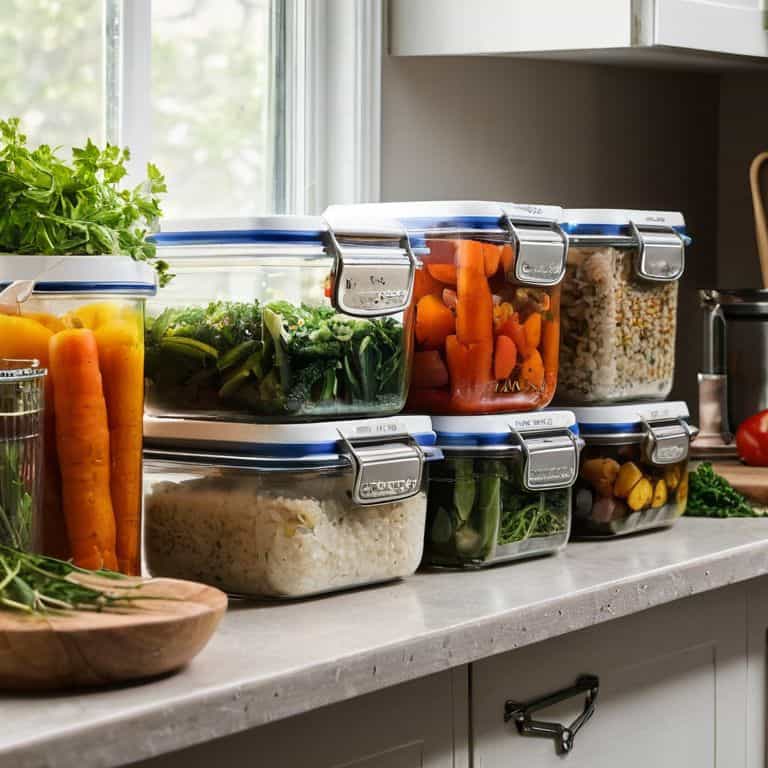
- Airtight containers (various sizes)
- Labels (for dating and labeling containers)
Supplies & Materials
- Plastic wrap (for short-term storage)
- Aluminum foil (for covering dishes)
- Reusable bags (for storing food in the refrigerator or freezer)
Step-by-Step Instructions
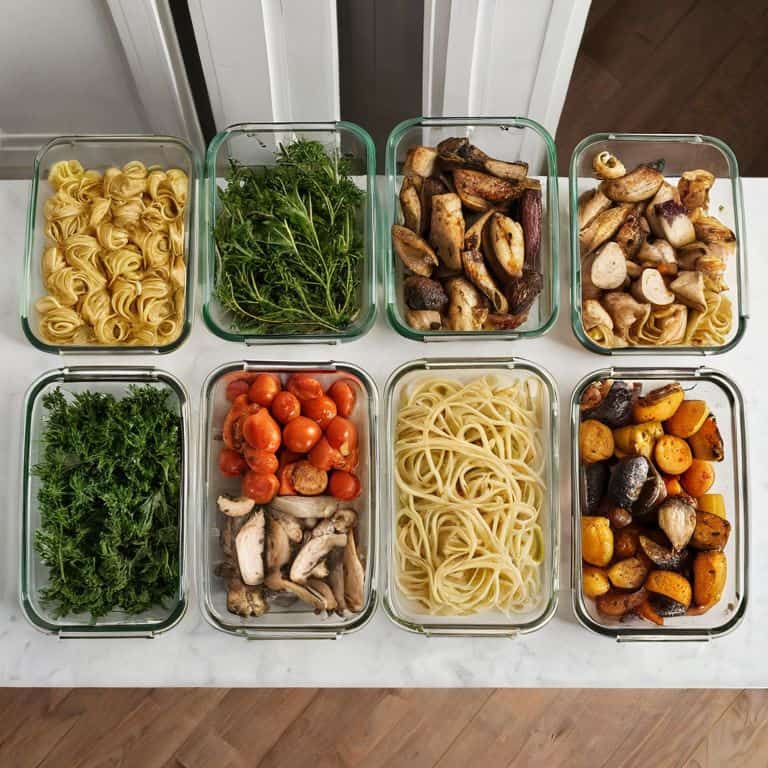
- 1. First, let’s talk about the importance of storing leftovers promptly. When I’m cooking up a storm in my tiny kitchen, I always try to have a plan in place for what’s going to happen to the leftovers. This means having a few trusty containers on hand that can be used to stash last night’s dinner in the fridge or freezer. I’ve learned that it’s all about being prepared and having the right tools for the job, which is why I always keep a stash of reusable containers in my cabinet.
- 2. Next, it’s time to portion out your leftovers. I like to think of this step as the key to making sure I don’t end up with a fridge full of mystery meals. By portioning out my leftovers into individual servings, I can easily see what I have on hand and make a plan for when I’ll eat each item. This also helps me to avoid wasting food, which is a major goal of mine when it comes to cooking in my small kitchen. Plus, it’s always a good idea to label and date each container so you know exactly what you’re looking at.
- 3. Now that you’ve got your leftovers portioned out, it’s time to think about storage strategies. For me, this means using a combination of stackable containers and reusable bags to keep my fridge and freezer organized. I like to store my most frequently used items, like last night’s dinner, in easy-to-reach locations, while less frequently used items get stored towards the back or in the freezer. This helps me to make the most of my limited storage space and ensures that I can always find what I need.
- 4. When it comes to keeping your leftovers fresh, temperature control is key. This means making sure your fridge is set at a safe temperature (below 40°F) and that you’re storing your leftovers in airtight containers to prevent contamination. I also like to use ice packs or cold compresses to keep my leftovers cool when I’m transporting them, which helps to prevent bacterial growth and keeps my food safe to eat.
- 5. Another important step in storing leftovers is to free up space in your fridge and freezer. For me, this means regularly cleaning out my appliances and getting rid of any expired or spoiled items. I also like to use vertical storage solutions, like my favorite magnetic spice strips, to keep my fridge and freezer organized and maximize my storage space. By keeping my appliances clutter-free, I can easily see what I have on hand and make a plan for when I’ll eat each item.
- 6. Once you’ve got your leftovers stored, it’s time to think about reheating strategies. I like to use a combination of microwave-safe containers and oven-safe dishes to reheat my leftovers, depending on the type of food and the desired level of crispiness. I also like to add a little bit of liquid to my leftovers when reheating, which helps to keep them moist and prevent drying out. This is especially important when reheating items like soups or sauces, which can quickly become too thick and sticky.
- 7. Finally, let’s talk about the importance of tracking your leftovers. For me, this means keeping a leftover log or meal planner to track what I’ve got on hand and when it’s set to expire. I also like to use sticker dots or color-coded labels to keep track of which items are the oldest and should be eaten first. By keeping track of my leftovers, I can ensure that I’m always eating the freshest items and reducing food waste in my kitchen. Plus, it’s a great way to get creative with new recipes and meal ideas, which is one of my favorite things about cooking in my small kitchen.
Stashing Leftovers Like Pro
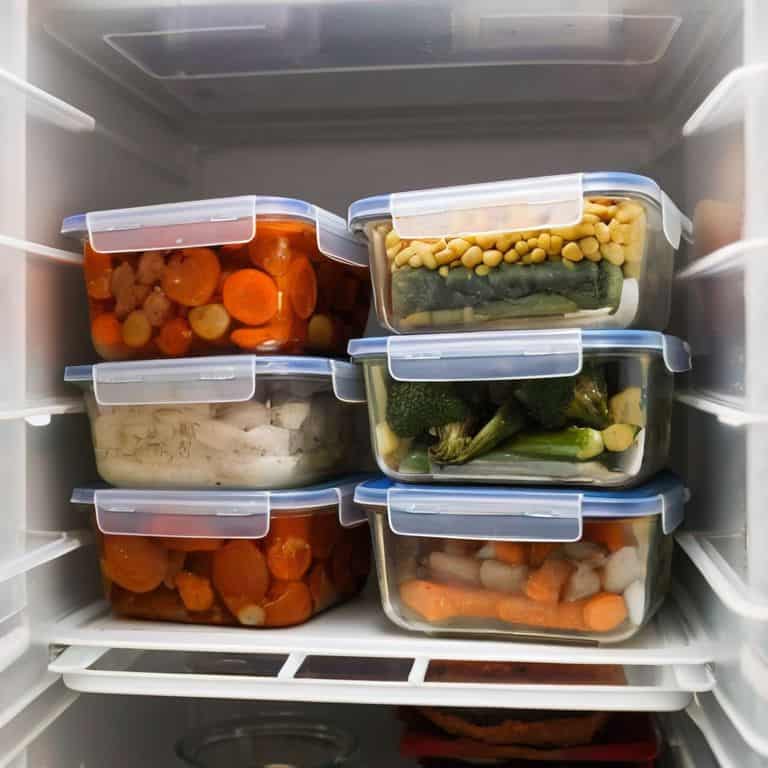
As I’ve learned from my own experiences in tiny kitchens, reheating frozen meals safely is just as important as storing them properly. When I’m rummaging through my freezer for last night’s leftovers, I make sure to check the shelf life of common leftovers to avoid any, ahem, “science experiments” from forming. It’s amazing how a small note on the container can save you from a world of uncertainty.
I’ve also developed a system for best practices for labeling leftovers, which includes the date, contents, and any relevant reheating instructions. This might seem like a no-brainer, but trust me, it’s a game-changer when you’re trying to decide what to eat on a busy evening. And, as an added bonus, it helps me maintain freezer organization, which is essential when you’re working with limited space.
In my small kitchen command center, I’ve found that using the right container sizes for food storage can make all the difference. By choosing containers that are just the right size, I can minimize waste and keep my fridge and freezer tidy. Plus, it helps prevent reducing cross contamination in kitchens, which is a top priority when you’re cooking for others – like during my famous board game nights!
Labeling Leftovers for Success
The key to making the most of your stashed leftovers is to know what you’ve got, and when it’s from. I’ve developed a simple labeling system that’s been a game-changer in my tiny kitchen. I use sticky notes or a label maker to mark each container with the date it was cooked, what’s inside, and any relevant reheating instructions. It’s amazing how much stress this little step saves me when I’m rummaging through the fridge or freezer for a quick meal.
By labeling my leftovers, I can easily keep track of what’s safe to eat and what’s probably past its prime. It’s also helped me get creative with meal planning, as I can see what ingredients I have on hand and plan accordingly. Give it a try, and you’ll be amazed at how much more efficiently you can use your leftovers – and how much less waste you’ll generate.
Reheating Frozen Meals Safely
Reheating Frozen Meals Safely
When I’m in a rush, I rely on my frozen stash. To reheat safely, I follow a simple rule: check the food’s temperature, not just its appearance. Use a food thermometer to ensure it reaches 165°F (74°C). For soups or sauces, I reheat them to a rolling boil. It’s also crucial to avoid overheating, as it can lead to dry, unappetizing meals.
By reheating with care, I can enjoy my favorite dishes whenever I want, without worrying about foodborne illness. This trick has been a game-changer in my tiny kitchen, allowing me to savor last night’s dinner or a homemade frozen meal, all while maintaining a safe and healthy food environment.
Savoring the Flavor, Not the Waste: 5 Tips to Store Leftovers Like a Pro
- Use airtight containers to keep leftovers fresh and your space clutter-free, just like I do in my tiny kitchen command center
- Label leftovers with the date and contents, so you know exactly what you’ve got and how long it’s been there – trust me, it’s a game-changer
- Freeze leftovers in portions, making it easy to grab and go, or to whip up a quick meal on a busy night
- Store leftovers in a specific spot in the fridge, like the ‘leftover zone’, to keep them organized and easily accessible
- Get creative with repurposing leftovers, like turning last night’s dinner into tomorrow’s lunch, to reduce waste and get the most out of your meals
Key Takeaways for a Clutter-Free Kitchen
Store leftovers in airtight containers to keep them fresh and your space organized, just like I do in my tiny kitchen command center
Label and date your leftovers to ensure you use the oldest ones first and reduce food waste, a trick I learned from my days living in micro-apartments in Tokyo
Get creative with reheating frozen meals and consider investing in a thermometer to ensure food safety, a lesson I learned the hard way after a few trial-and-error experiments in my own kitchen
The Wisdom of Waste Reduction
By storing leftovers with intention, we’re not just saving food, we’re saving stories – the memories of meals shared, laughter, and love – and giving them a chance to be replayed again in our tiny kitchens, turning what could be waste into a continuation of community and connection.
Noah Burton
Embracing the Art of Leftover Storage
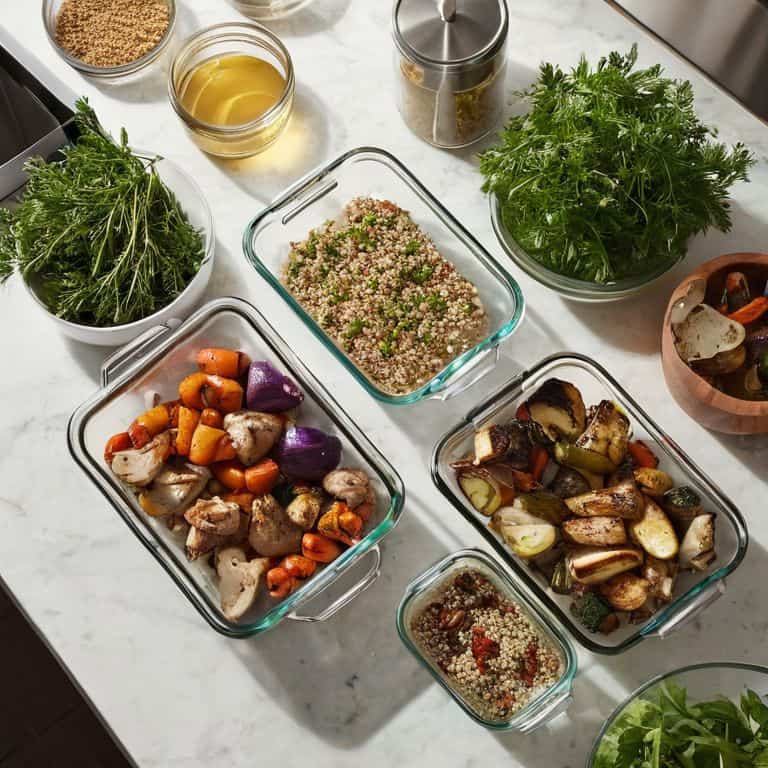
As I reflect on our journey through the world of leftover storage, I’m reminded that it’s all about finding balance between enjoying our meals and reducing waste. We’ve covered the essential steps to store leftovers properly, from using airtight containers to labeling and reheating safely. By implementing these simple strategies, we can make a significant impact on our daily lives and the environment. It’s about being mindful of our food consumption and taking small actions that collectively lead to a more sustainable lifestyle.
As we conclude this guide, I want to leave you with a final thought: the art of leftover storage is not just about saving food, but about embracing a mindset that values experiences over excess. By choosing to live more intentionally, we open ourselves up to a world of possibilities, from exploring new recipes to connecting with our communities. So, let’s raise a glass (or a reusable container) to savoring the flavor of life, one delicious, sustainably stored meal at a time.
Frequently Asked Questions
How long can I safely store leftovers in the fridge before they go bad?
Honestly, I’ve had my fair share of leftover roulette – but the general rule is to store leftovers in the fridge for 3 to 4 days max. Anything after that, and you’re playing with foodborne illness fire. Of course, it also depends on the type of food and how well it’s sealed, but as a rule of thumb, if it’s been more than 4 days, it’s best to err on the side of caution and toss it.
Can I reuse containers from takeout or should I invest in special airtight containers for storing leftovers?
Honestly, I’ve reused takeout containers in a pinch, but investing in a few good airtight ones is a game-changer. They’re worth the small investment for keeping leftovers fresh and your kitchen clutter-free. Plus, they’re often multi-use, which I love – my rule is that every item in my tiny kitchen should have at least two functions!
What's the best way to organize my fridge to maximize space and keep leftovers visible so they don't get forgotten?
For me, the fridge is like a tiny city – everything needs its own zone. I use stackable containers and baskets to keep leftovers visible and accessible. Labeling each container with the date and contents is also a game-changer, so I can quickly see what’s available and what’s approaching its expiration date.