I still remember the first time I tried to make homemade pasta in my tiny New York City kitchen – it was a game-changer. I had always thought that making homemade pasta was a tedious, time-consuming process that required a lot of space and special equipment. But, as it turns out, that’s just not true. With a few simple ingredients and some clever hacks, you can learn how to make homemade pasta that’s not only delicious but also surprisingly easy to make, even in the coziest of kitchens.
In this article, I’ll share my honest, no-hype advice on how to make homemade pasta from scratch, using just a few essential tools and ingredients. I’ll walk you through the entire process, from mixing and kneading the dough to cutting and cooking the perfect noodles. You’ll learn how to overcome common obstacles, like limited counter space and lack of specialized equipment, and still achieve amazing results. By the end of this guide, you’ll be empowered to create your own delicious homemade pasta dishes, even in the smallest of kitchens, and discover the joy of cooking with fresh, handmade ingredients.
Table of Contents
- Guide Overview: What You'll Need
- Step-by-Step Instructions
- Tiny Kitchen Pasta Magic
- 5 Essential Tips for Crafting Incredible Homemade Pasta in Your Tiny Kitchen
- Key Takeaways for Tiny Kitchen Pasta Makers
- The Pasta Maker's Mantra
- Embracing the Joy of Homemade Pasta in Small Spaces
- Frequently Asked Questions
Guide Overview: What You'll Need
Total Time: 2 hours 30 minutes
Estimated Cost: $10 – $20
Difficulty Level: Intermediate
Tools Required
- Stand Mixer (with dough hook attachment)
- Pasta Machine (manual or electric)
- Colander (for drying pasta)
- Sharp Knife (for cutting pasta)
- Clean Surface (for kneading dough, approximately 2 feet by 3 feet in size)
Supplies & Materials
- All-Purpose Flour 2 cups
- Large Eggs 2 eggs
- Salt 1/4 teaspoon
- Water as needed, approximately 1 cup
- Olive Oil for brushing pasta
Step-by-Step Instructions
- 1. First, let’s start with the basics: to make delicious homemade pasta, we need to create a simple dough using just a few ingredients – flour, eggs, and salt. In my tiny kitchen, I like to use a _stand mixer_ with a dough hook attachment to make the process easier and less messy.
- 2. Next, we need to combine 1 cup of all-purpose flour and 1 egg in the mixer bowl. I always make sure to use _room temperature_ eggs for better mixing and a more even texture. Mix the ingredients on low speed until they start to come together in a shaggy mass, then add a pinch of salt to bring out the flavors.
- 3. Now it’s time to knead the dough, which is my favorite part of the process. I like to think of it as a _therapeutic exercise_ that helps me relax and unwind after a long day. If you have a stand mixer, use the dough hook attachment to knead the dough for about 5-7 minutes, until it becomes smooth and elastic. If not, you can knead the dough by hand for about 10 minutes.
- 4. Once the dough is ready, we need to let it rest for at least 30 minutes to allow the gluten to relax. This is a crucial step, as it will make the dough _easier to roll out_ and shape into our desired pasta form. I like to use this time to prepare my pasta sauce or other accompaniments, so everything is ready to go when the pasta is cooked.
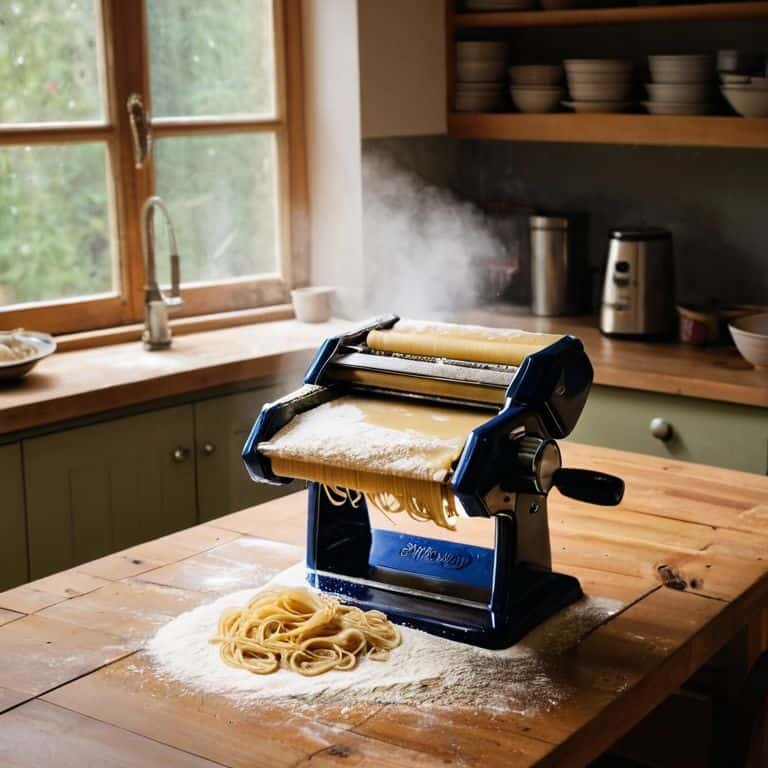
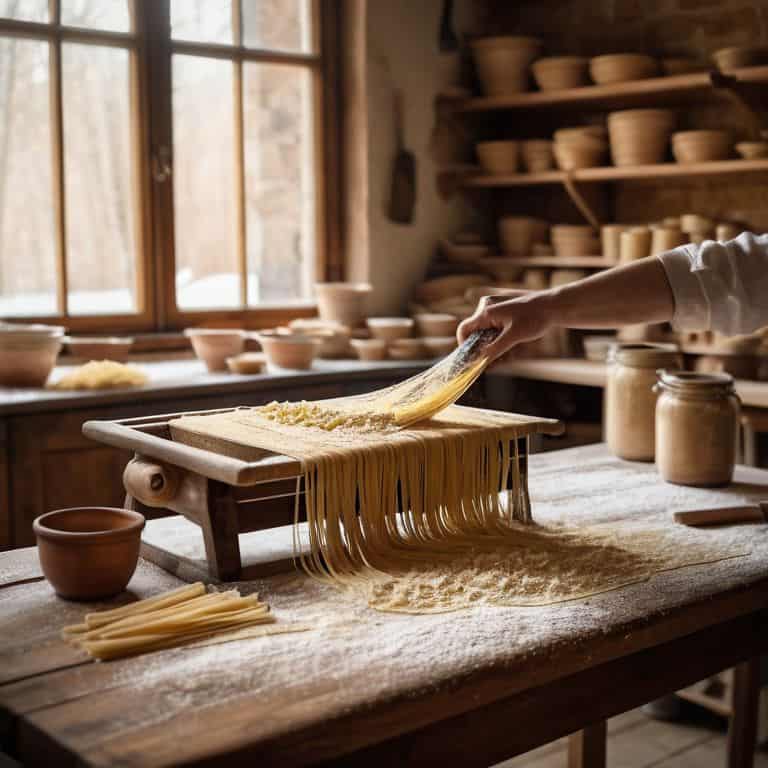
- 5. After the dough has rested, it’s time to roll it out into thin sheets. I use a _manual pasta machine_ to achieve the perfect thickness, but you can also use a rolling pin if you don’t have one. Start by rolling out the dough to a thick setting, then gradually decrease the thickness as you roll out the dough to your desired level.
- 6. Now we can start shaping our pasta into the desired form – whether it’s spaghetti, fettuccine, or something more complex like _ravioli_. I love using a pasta cutter or a sharp knife to create uniform shapes and add a touch of elegance to my dishes. Remember to work quickly, as the dough can dry out if it’s exposed to air for too long.
- 7. Finally, it’s time to cook our freshly made pasta. I like to use a large pot of _boiling salted water_ to cook my pasta, as it helps to bring out the natural flavors and textures. Cook the pasta for 2-5 minutes, or until it’s al dente, then drain it and serve with your favorite sauce and toppings. The result is a truly delicious meal that’s sure to impress your friends and family.
Tiny Kitchen Pasta Magic
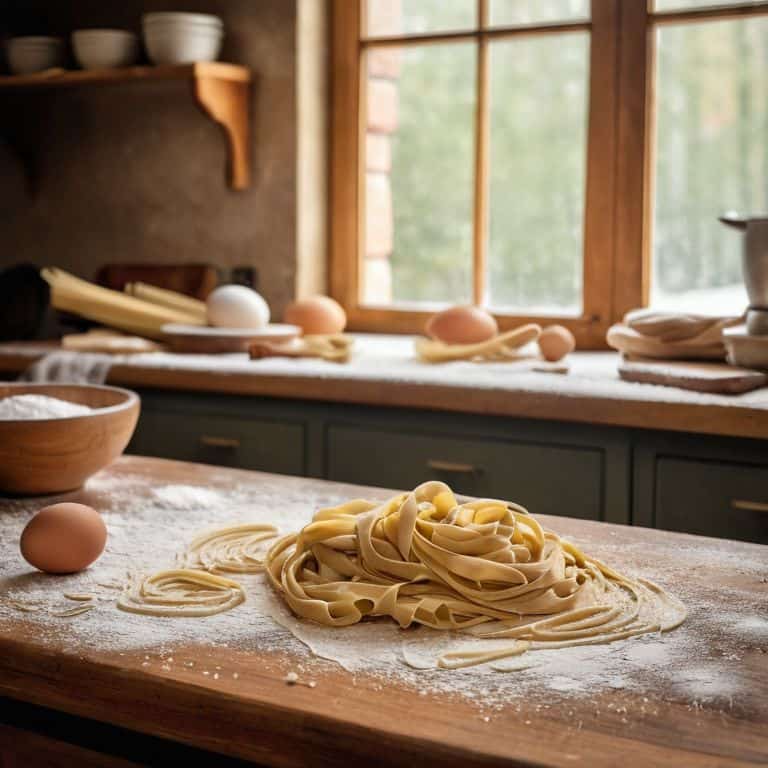
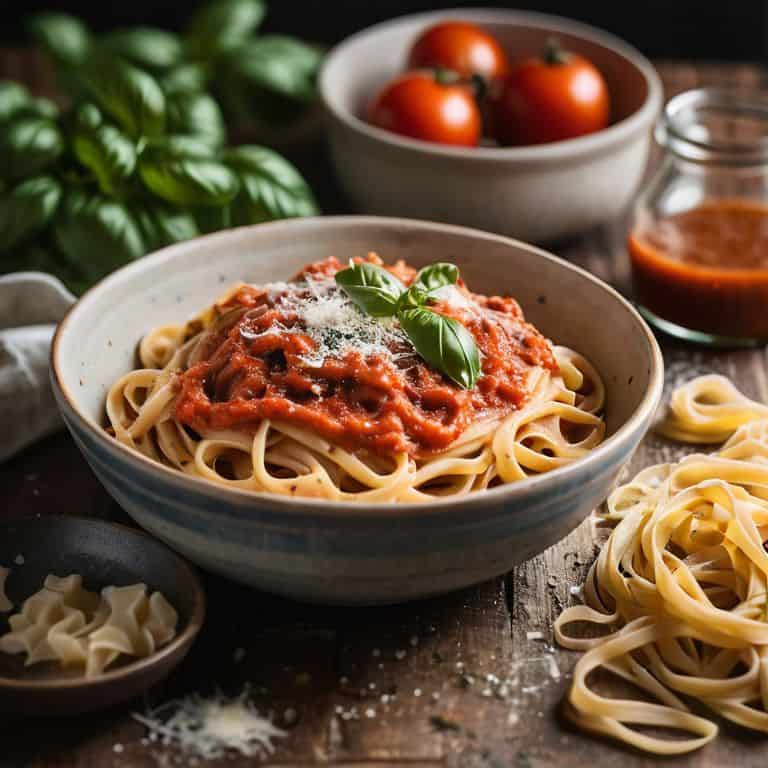
As I work my magic in my tiny kitchen, I’ve learned that making handmade fettuccine is all about embracing the process. It’s therapeutic, really – the kneading, the rolling, the satisfaction of watching your dough come to life. To achieve this, I rely on simple pasta dough ingredients, like flour, eggs, and salt, which are easily accessible in any urban pantry. When it comes to traditional Italian pasta making, it’s all about the technique, not the tools.
In my experience, one of the most crucial steps is pasta drying techniques. You see, once you’ve cut your fettuccine into perfectly imperfect strands, you need to dry them to prevent sticking. I use a makeshift drying rack, courtesy of a repurposed wooden spoon and some twine. It’s all about common pasta making mistakes and learning from them – like overworking the dough or not drying the pasta long enough.
To take your pasta game to the next level, try experimenting with homemade pasta without a machine. It’s incredibly liberating, and the results are well worth the extra effort. With a little practice, you’ll be whipping up delicious, handmade fettuccine in no time, all from the comfort of your own tiny kitchen. Remember, it’s all about the journey, not the destination – and the joy of creating something truly special in a small space.
Handmade Fettuccine Recipe Secrets
To take your handmade fettuccine to the next level, I swear by a few secret techniques. First, make sure your dough rests for at least 30 minutes – this will make it so much easier to roll out. I like to use my toaster oven as a makeshift proofing box, it’s the perfect size for a small ball of dough. When you’re ready to roll, aim for a thickness of about 1/16 inch – any thicker and your fettuccine will be too chunky.
I also love experimenting with different flavor combinations in my fettuccine dough. Try adding some grated nutmeg or dried herbs to give your pasta a unique twist. And don’t be afraid to get creative with your fillings and sauces – after all, that’s the best part of cooking in a tiny kitchen, right?
Simple Pasta Dough Without Machines
In my tiny kitchen, I’ve learned to ditch the machines and get up close and personal with my pasta dough. It’s amazing how a little elbow grease can lead to a more tender, more flavorful final product. To make simple pasta dough without machines, I start by combining flour, eggs, and a pinch of salt in a large mixing bowl. Then, I get in there with my hands and mix until a shaggy dough forms.
From there, it’s all about kneading. I love this part – it’s meditative, almost. I knead the dough on a floured surface for about 10 minutes, until it becomes smooth and elastic. And that’s it! My dough is ready to rest, and eventually, become the foundation for a delicious homemade pasta dish. It’s a small kitchen hack that makes all the difference.
5 Essential Tips for Crafting Incredible Homemade Pasta in Your Tiny Kitchen
- Punch down that dough: Don’t be afraid to get a little aggressive with your pasta dough – it needs a good knead to develop that perfect chew
- Egg-cellent ratio: Remember, the key to a great pasta dough is using the right ratio of eggs to flour, so don’t skip measuring those ingredients
- Resting is key: Letting your dough rest is crucial, it allows the gluten to relax, making it easier to roll out and shape into your desired pasta form
- Roll with it: Invest in a good pasta roller or get creative with a wine bottle, the goal is to get that dough thin and even, perfect for cooking up a storm
- Dry, dry, dry: Before cutting your pasta, make sure it’s completely dry, this will help prevent it from sticking together, and trust me, you don’t want that mess in your tiny kitchen
Key Takeaways for Tiny Kitchen Pasta Makers
Embracing the challenge of a small kitchen can actually boost your creativity and lead to the development of innovative, space-saving recipes that pack a big flavor punch
With the right techniques and minimal equipment, such as a toaster oven and an induction burner, you can craft a variety of delicious homemade pasta dishes that rival those from larger kitchens
By focusing on multi-functional gadgets, efficient meal prep, and clever use of ingredients, anyone can become a master of tiny kitchen cuisine and enjoy the satisfaction of cooking amazing meals in even the coziest of spaces
The Pasta Maker's Mantra
Homemade pasta isn’t just about the recipe, it’s about embracing the messy, beautiful process of creation in the coziest of kitchens – where every strand of noodles is a testament to the power of tiny spaces and giant flavors!
Ava Quinn
Embracing the Joy of Homemade Pasta in Small Spaces
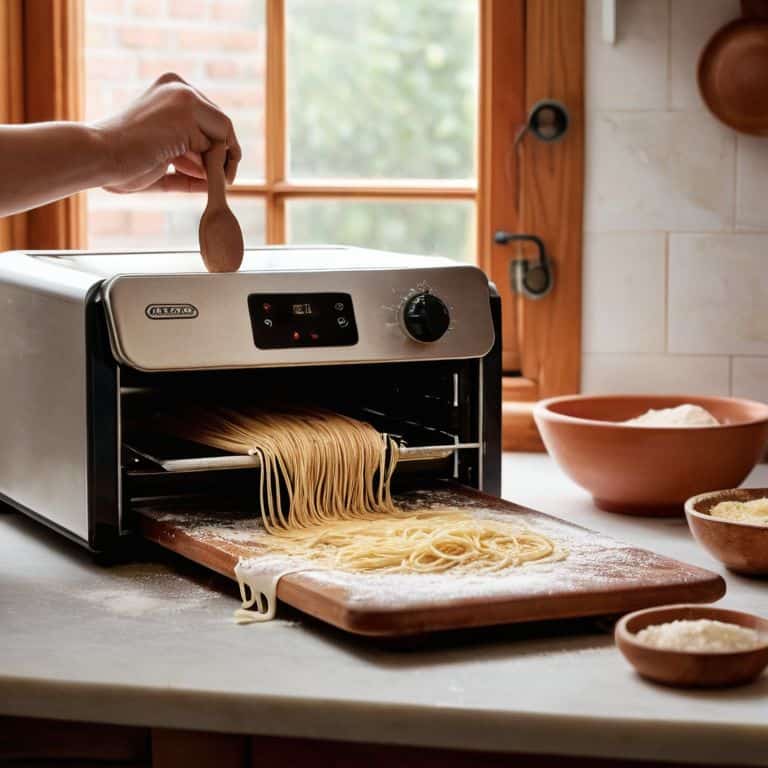
As we’ve explored the world of homemade pasta, from the basics of creating your own dough to the secrets of crafting perfect fettuccine, it’s clear that size is just a number. Whether you’re working with a toaster oven and an induction burner or have managed to squeeze in a few multi-functional gadgets, the key to success lies in your ability to adapt and be resourceful. We’ve delved into the magic of tiny kitchen pasta making, discovering that with the right techniques and a bit of creativity, you can produce restaurant-quality dishes in even the coziest of kitchens.
So, as you embark on your own homemade pasta journey, remember that it’s not about the space you have, but about the flavor and love you put into every dish. Don’t be afraid to experiment, to try new recipes, and to make those one-pan wonders that will leave your friends and family in awe. With a little practice and patience, you’ll be whipping up gourmet meals like a pro, proving that even in the smallest of kitchens, big flavors are always within reach.
Frequently Asked Questions
What type of flour is best for making homemade pasta?
For homemade pasta, I swear by ’00’ flour or all-purpose flour with a high protein content. The ’00’ flour gives a silky smooth texture, while all-purpose flour provides a more rustic bite. Both work beautifully in my tiny kitchen, and with a little practice, you’ll be whipping up delicious pasta in no time!
Can I make homemade pasta without a pasta machine or other special equipment?
Absolutely, I’m all about minimal equipment in my tiny kitchen. You can make amazing homemade pasta without a pasta machine – just use a rolling pin to get the dough thin, and a sharp knife to cut your fettuccine or pappardelle. It’s a bit more elbow grease, but totally doable and still yields delicious results.
How do I dry and store homemade pasta to keep it fresh for a longer period?
Drying homemade pasta is a breeze, even in a tiny kitchen! I simply lay it out on a clean towel or pasta drying rack, making sure not to overlap the strands. Once dry, I store it in airtight containers or ziplock bags to keep it fresh for up to 3 days. Easy peasy!