I still remember the day I moved into my tiny city apartment, and my kitchen counter space suddenly became the ultimate luxury. I found myself facing the daunting task of choosing between a multi-cooker vs slow cooker vs pressure cooker, with each one promising to revolutionize my cooking experience. But, as someone who’s obsessed with streamlining their kitchen, I knew I had to make a choice that would maximize my limited counter space.
As a minimalist consultant, I’ve tested numerous kitchen appliances, and I’m here to give you the lowdown on which one is truly worth the investment. In this article, I’ll cut through the hype and provide you with honest, experience-based advice on how to choose the best appliance for your needs. I’ll share my personal story of navigating the world of multi-cookers, slow cookers, and pressure cookers, and provide you with practical tips on how to make the most of your kitchen counter space. So, if you’re ready to simplify your cooking routine and make the most of your tiny kitchen, keep reading!
Table of Contents
Multi-Cooker
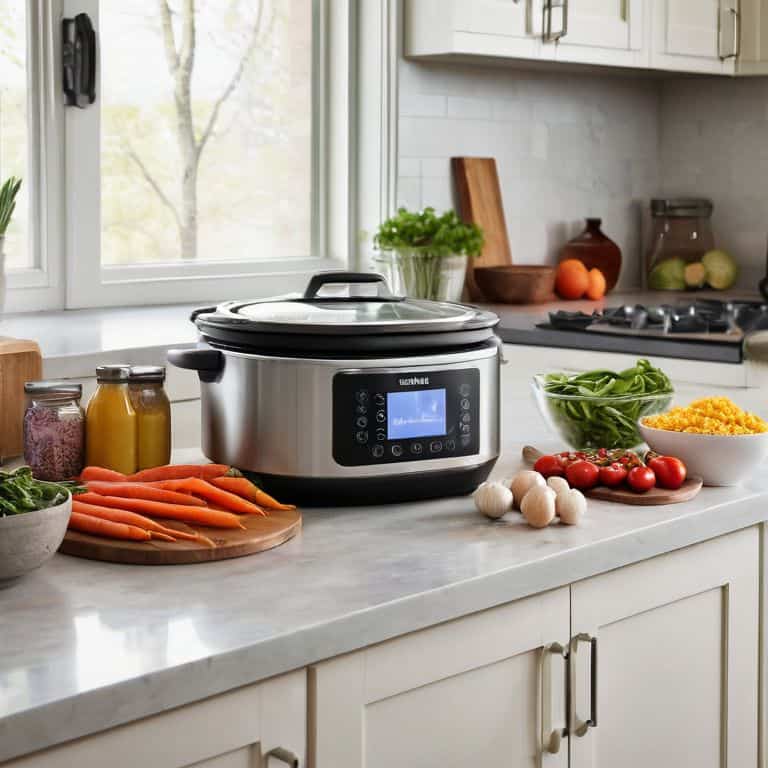
A multi-cooker is a kitchen appliance that combines the functions of a pressure cooker, slow cooker, rice cooker, and yogurt maker, among others, allowing for a wide range of cooking techniques with a single device. Its core mechanism involves using a microprocessor to control temperature, pressure, and cooking time, with the main selling point being its versatility in preparing various dishes, from soups to grains, with minimal effort. The multi-cooker’s ability to perform multiple functions makes it an attractive option for those looking to save space in their kitchen.
For someone like me, who values minimalist kitchen design, a multi-cooker is intriguing because it potentially replaces several single-use appliances, freeing up valuable counter space. I’ve found that having a device that can sauté, steam, and pressure cook all in one is incredibly convenient, especially when cooking for one or two people. This convenience translates to less clutter and more time to focus on the cooking process itself, rather than juggling multiple appliances.
Slow Cooker
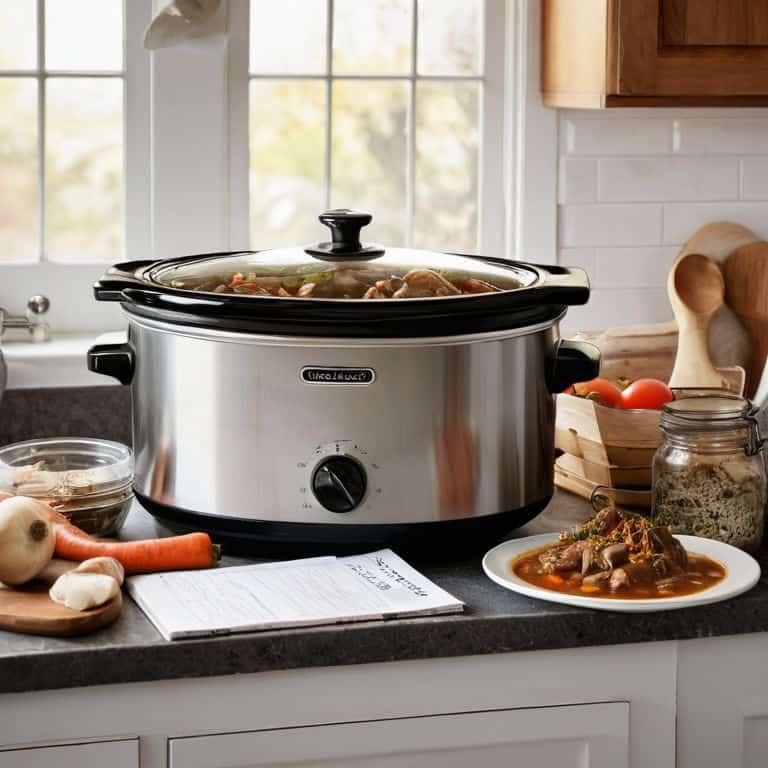
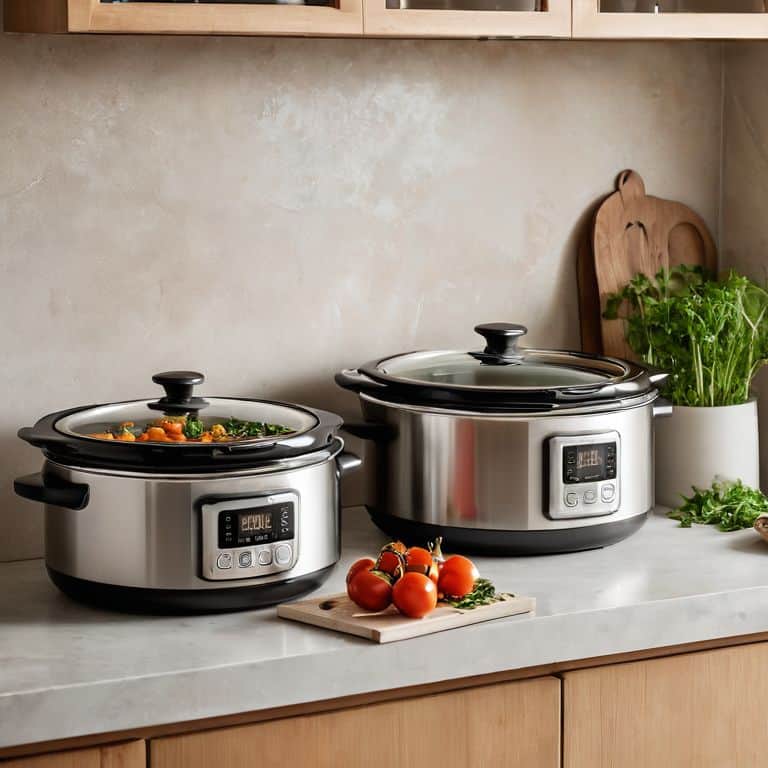
A slow cooker, also known as a crock pot, is an electrical cooking device that uses low temperatures over a long period to cook food, ideal for preparing meals that simmer for hours, such as stews, roasts, and soups. The slow cooker’s main mechanism involves a heating element, thermostat, and insulation to maintain a consistent temperature, with its primary selling point being the convenience of cooking without constant supervision. This aspect makes it perfect for busy individuals who want to come home to a ready meal.
From my perspective, as someone who appreciates efficiency in cooking, a slow cooker offers a unique benefit: it allows for hands-off cooking, enabling me to prepare a meal in the morning and have it ready by evening, without taking up too much of my time. This is particularly useful for days when I’m testing new gear for one-bag travel or exploring minimalist design stores, as it ensures I have a hot, home-cooked meal waiting, even on the busiest of days.
Head-to-Head Comparison: Multi-Cooker, Slow Cooker, and Pressure Cooker
| Feature | Multi-Cooker | Slow Cooker | Pressure Cooker |
|---|---|---|---|
| Price | $50-$200 | $20-$100 | $50-$300 |
| Key Feature | Multiple cooking functions | Low and slow cooking | High pressure for fast cooking |
| Best For | Versatility and convenience | Long, hands-off cooking | Quick cooking and tenderizing |
| Cooking Time | Varies by function | 6-12 hours | 15-60 minutes |
| Ease of Use | Moderate to easy | Easy | Moderate, requires some skill |
| Cleaning Ease | Easy to moderate | Easy | Moderate, some parts may be tricky |
| Safety Features | Automatic shut-off, overheating protection | Automatic shut-off | Locking lid, pressure regulator |
Multi Cooker vs Slow Cooker vs Pressure Cooker
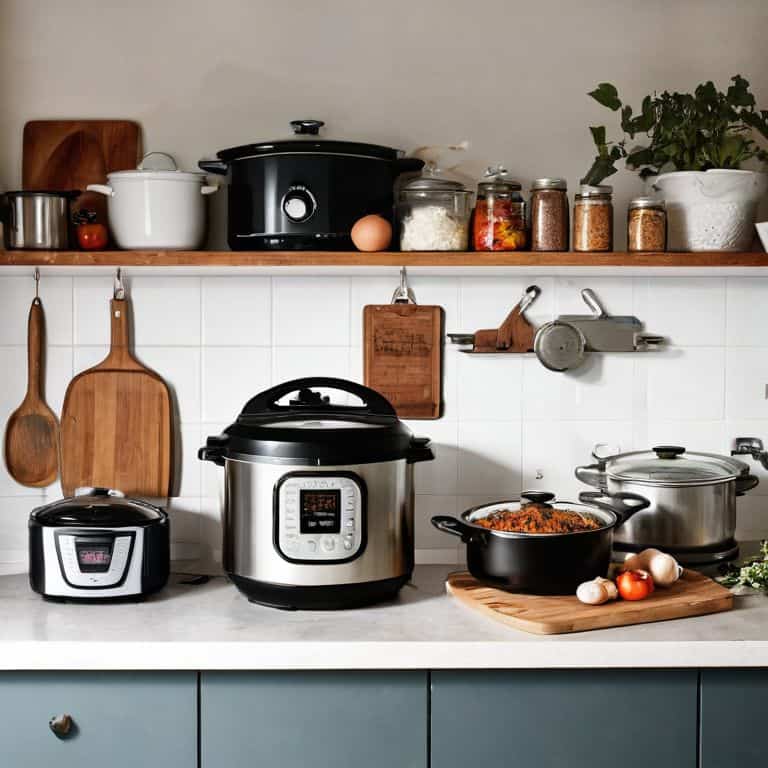
When it comes to counter space, the debate between multi-cooker, slow cooker, and pressure cooker takes a crucial turn. In a tiny kitchen like mine, every inch counts, and I need to know which of these appliances will give me the most bang for my buck – or rather, my counter space.
In a head-to-head analysis, multi-cookers and slow cookers tend to be similar in size, with most models ranging from 10 to 15 inches in width. However, pressure cookers are often more compact, making them a great option for those with limited counter space. On the other hand, multi-cookers offer multi-functionality, allowing me to cook a variety of dishes with one appliance, which can be a major space-saver in the long run.
When comparing the three, I have to consider the practical implications of each appliance. While slow cookers are great for cooking meals over a long period, they often take up valuable counter space without offering much in terms of multi-functionality. In contrast, pressure cookers and multi-cookers offer a range of cooking options, making them more desirable for those with limited space. In this category, I declare the pressure cooker the winner, as its compact size and quick cooking time make it an ideal choice for tiny kitchens like mine.
Key Takeaways for Your Tiny Kitchen
I’ve found that a multi-cooker is the most versatile option, allowing you to pressure cook, slow cook, and sauté in one compact unit, making it a space-saving superstar
When it comes to footprint score, the pressure cooker wins, but only if you plan on using it frequently – otherwise, the slow cooker’s gentle simmer might be a better use of your counter real estate
Ultimately, the choice between a multi-cooker, slow cooker, and pressure cooker comes down to your personal cooking style and the recipes you make most often – so take stock of your habits before deciding which one deserves a coveted spot in your kitchen
The Truth About Kitchen Appliances
In the battle for counter space, I’ve come to realize that the best kitchen appliance is not the one with the most features, but the one that can convincingly replace three others – and still leave room for a decent cup of coffee.
Clara Finch
The Final Verdict: Which Should You Choose?
After comparing the multi-cooker, slow cooker, and pressure cooker, it’s clear that each has its unique strengths and weaknesses. The multi-cooker stands out for its versatility, allowing you to cook a variety of dishes with ease. On the other hand, the slow cooker is perfect for those who value convenience and hands-off cooking. The pressure cooker, with its ability to significantly reduce cooking time, is ideal for busy home cooks. When considering which one to choose, it’s essential to think about your personal cooking style and the types of dishes you frequently prepare.
Ultimately, the best choice for you will depend on your specific needs and preferences. If you’re a busy professional who values speed and efficiency, the pressure cooker might be the way to go. However, if you’re someone who enjoys cooking a variety of dishes and wants a single appliance that can handle it all, the multi-cooker is likely your best bet. For those who prioritize convenience and don’t mind waiting for their meals to cook, the slow cooker is a great option. By considering your lifestyle and cooking habits, you can make an informed decision and choose the appliance that will bring the most value to your kitchen.
Frequently Asked Questions
How do the cooking times compare between a multi-cooker, slow cooker, and pressure cooker for the same type of dish?
Cooking times vary drastically between these three. For a hearty stew, a pressure cooker can cut time to under an hour, while a slow cooker takes 6-8 hours. A multi-cooker typically falls in between, around 2-3 hours. I’ve tracked these times in my own tiny kitchen, and let me tell you, every minute counts when space is limited.
Can a multi-cooker really replace both a slow cooker and a pressure cooker, or are there specific tasks where one of the others is better suited?
Honestly, a multi-cooker can handle most tasks, but for tenderizing tough cuts, a slow cooker’s low-and-slow approach still reigns supreme, while a pressure cooker’s speed can’t be beat for quick cooking tasks like beans or broth.
What are the key differences in cleanup and maintenance between these three types of cookers, and how might that impact the choice for someone with limited kitchen space?
When it comes to cleanup and maintenance, I’ve found that pressure cookers tend to have the most parts to clean, while slow cookers often have a simple, dishwasher-safe design. Multi-cookers fall somewhere in between. For tiny kitchens, I prioritize ease of cleaning – a clutter-free space is a happy space!