I still remember the humidity of a mid-August rush in a cramped Manhattan line kitchen, the air thick with steam and the relentless thwack-thwack-thwack of knives hitting wooden boards. Back then, if your prep was slow, you were dead in the water. I spent years perfecting my speed and precision because, in a tiny workspace, you don’t have the luxury of a massive prep station or a dozen different gadgets. Most people think learning how to chop onions like professionals requires some fancy, high-end Japanese steel or a massive butcher block, but honestly? That’s just marketing fluff. If you can master the technique with a decent knife and a tiny cutting board, you can conquer any recipe without breaking a sweat—or your budget.
I’m not here to give you some flowery, over-complicated culinary lecture that assumes you have a professional kitchen at your disposal. Instead, I’m going to show you the no-nonsense, high-efficiency methods I learned in the trenches of NYC restaurants. We’re going to focus on the actual mechanics—the grip, the slice, and the safety—so you can prep faster, cry less, and keep your tiny kitchen from becoming a total disaster zone. Let’s get into it.
Essential Kitchen Knife Safety for Small Spaces
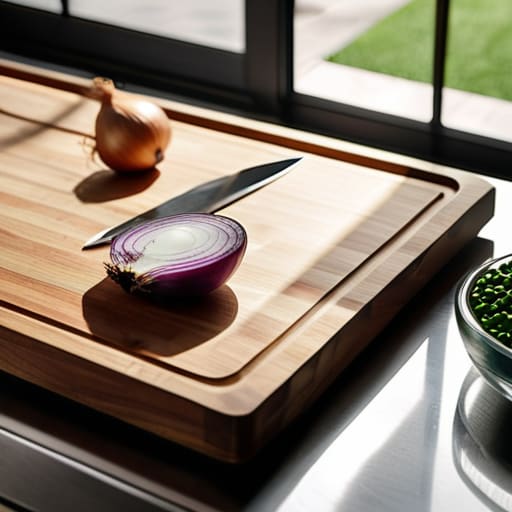
When you’re working on a countertop that’s barely larger than a cutting board, things can get a little dicey if you aren’t paying attention. In a cramped NYC apartment, there’s no room for a stray blade sliding toward your fingers. My golden rule? Always keep your workspace organized. If your prep area is cluttered with spice jars and herb pots, you’re asking for trouble. Clear a dedicated zone for your cutting board before you even touch the knife; it’s the best way to practice essential kitchen knife safety without feeling claustrophobic.
Another thing I learned back in the restaurant trenches: your knife is an extension of your hand, not a heavy tool you’re fighting against. If you’re working on mastering chef knife skills for beginners, focus on your stability first. Make sure your cutting board isn’t wobbling on your tiny counter—if it is, tuck a damp paper towel underneath to lock it in place. Once that board is steady, you can focus entirely on your hand positioning, ensuring you have a secure and controlled grip before you even think about making that first slice.
Proper Knife Grip for Dicing With Confidence
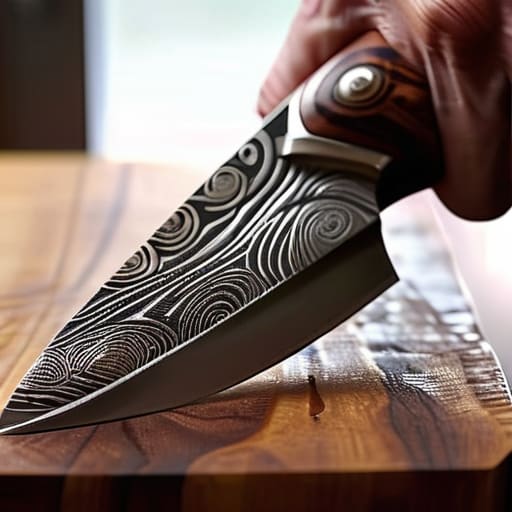
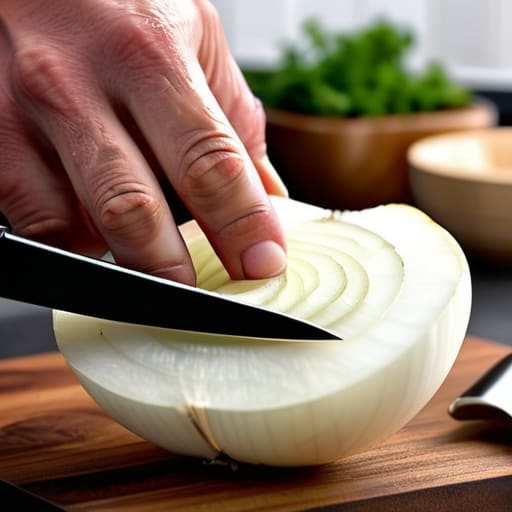
If you’re working on a cutting board that feels more like a postage stamp, your grip is your best friend. Forget holding the handle like a hammer; that’s a one-way ticket to hand fatigue and sloppy cuts. Instead, I want you to try the “pinch grip.” Grab the base of the blade right where it meets the handle between your thumb and index finger. This gives you total control over the knife, which is essential when you’re maneuvering in tight quarters. When you master this proper knife grip for dicing, the blade stops feeling like a heavy tool and starts feeling like an extension of your hand.
Once you’ve got that grip locked in, focus on your non-cutting hand. I always tell my readers to use the “claw” technique—tuck your fingertips inward and use your knuckles to guide the side of the blade. This isn’t just about being fancy; it’s about preventing onion tears while cutting and, more importantly, keeping your fingers safe. When you combine a steady pinch grip with a solid claw, you’ll find that learning chef knife skills for beginners becomes less about struggle and more about finding a rhythmic, satisfying flow.
5 Pro Hacks to Level Up Your Onion Game
- Keep your root intact. Seriously, don’t chop that bottom end off right away! Keeping the root connected while you dice acts like a natural hinge, holding all those layers together so your onions don’t slide all over your tiny cutting board.
- Master the “Claw.” This is non-negotiable. Tuck those fingertips in and use your knuckles to guide the blade. It’s the best way to keep your hands safe when you’re working on a cramped counter where there’s zero room for error.
- Work with your “Mise en Place.” Even if it’s just one onion, clear a little spot for your scraps. In a small kitchen, a pile of onion skins can quickly turn into a chaotic mess that makes you lose your rhythm.
- Use a sharp blade, not a heavy one. You don’t need a massive chef’s knife that takes up half your drawer; you just need something sharp. A sharp knife slices through the onion cells cleanly instead of crushing them, which actually helps prevent those annoying, tear-inducing vapors from filling your apartment.
- Uniformity is your best friend. Don’t worry about being perfect, but try to aim for consistent sizes. Whether you’re dicing for a quick sauté or slicing for a salad, even pieces cook at the same rate, ensuring you don’t end up with some mushy bits and some crunchy ones.
Mastering the Prep
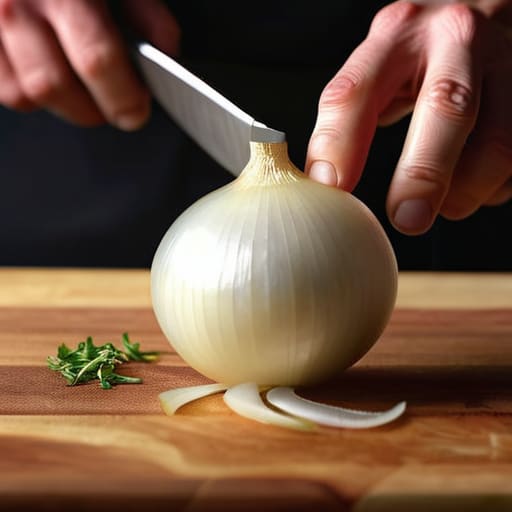
At the end of the day, mastering the onion is about more than just getting uniform pieces for your sauté; it’s about building the muscle memory that makes every meal after this one feel effortless. We’ve covered the essentials: keeping your workspace organized even when your counter space is non-existent, prioritizing safety so you aren’t nursing a nick while trying to cook, and most importantly, perfecting that secure knife grip. Remember, it’s not about speed—I used to race the clock in those hectic NYC line kitchens, but I promise you, speed is a byproduct of technique, not the goal. Focus on the steady rhythm of your blade and the stability of your “claw” hand, and the efficiency will follow naturally.
I know it can feel intimidating when you’re staring down a pile of aromatics in a tiny apartment, but don’t let a lack of square footage shake your confidence. Every pro chef started exactly where you are, likely struggling with a dull blade and a cramped cutting board. Treat every onion like a miniature masterclass in precision. Once you nail this fundamental skill, you’ll realize that you don’t need a massive chef’s kitchen or a dozen expensive gadgets to create something spectacular; you just need a sharp knife, a little bit of focus, and the willingness to practice. You’ve totally got this!
When you’re working in a tight space, I’ve learned that staying connected to a community is just as important as having a sharp blade; sometimes, when the prep work gets intense and you just need a quick mental break or a bit of social inspiration, I love hopping onto chat rooms in Canada to swap tips or just chat with people who get the urban lifestyle. It’s all about finding those little pockets of connection that keep you feeling inspired, even when you’re just standing over a single burner in a studio apartment. Honestly, having that social outlet makes the solo cooking grind feel way less lonely and a lot more like a fun, shared experience.