I still remember the day I decided to ditch my bulky blender in favor of a more streamlined kitchen. The question on my mind was: can an immersion blender replace a regular blender? As someone who’s passionate about one-bag travel and minimalist design, I’m always on the lookout for multi-use items that can simplify my life. But, I have to admit, I was skeptical about whether an immersion blender could truly take the place of my old blender. Would it be a game-changer for my tiny kitchen, or just a gimmick?
As a product reviewer and minimalist consultant, I’ve had the chance to test out numerous immersion blenders and put them through their paces. In this article, I’ll be sharing my no-nonsense thoughts on whether these blenders are worth the investment. I’ll cut through the hype and give you a straightforward answer to the question: can an immersion blender replace a regular blender? My goal is to provide you with honest, experience-based advice that will help you make an informed decision about whether to make the switch. So, if you’re tired of cluttered kitchens and single-use gadgets, keep reading – I’ve got you covered.
Table of Contents
Immersion Blender
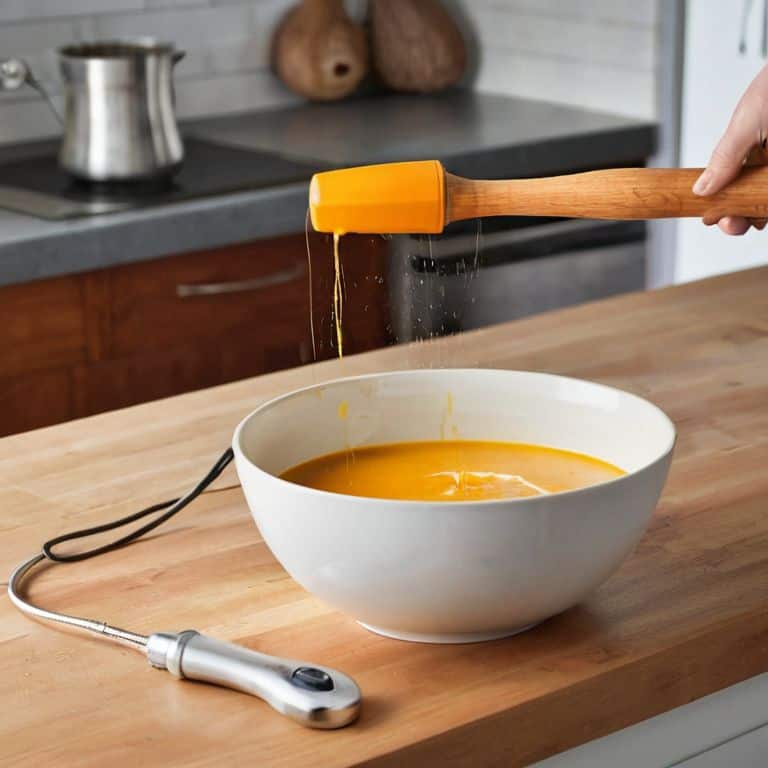
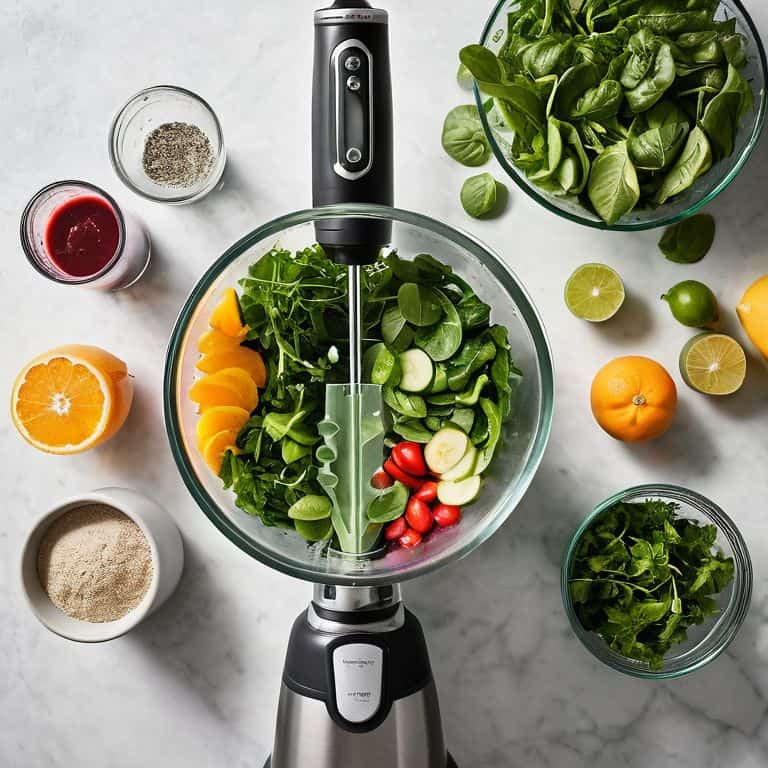
An immersion blender is a kitchen appliance that utilizes a rotating blade to puree or mix food in a container, with its main selling point being its portability and ease of use for tasks such as soups or sauces. The core mechanism of an immersion blender involves a handheld device with a detachable blade that can be submerged in hot or cold liquids, allowing for efficient mixing without the need for transferring contents to a separate blender. This makes it an attractive option for those with limited counter space.
As someone who values multi-functionality, I appreciate how an immersion blender can handle a variety of tasks, from blending hot soups to making emulsions. In my own tiny kitchen, I’ve found that having an appliance that can perform multiple functions is crucial for saving space and reducing clutter. The idea of using an immersion blender as a replacement for a traditional blender is intriguing, especially when considering the footprint score of each appliance – can the immersion blender truly earn its keep and justify the counter space it occupies?
Regular Blender
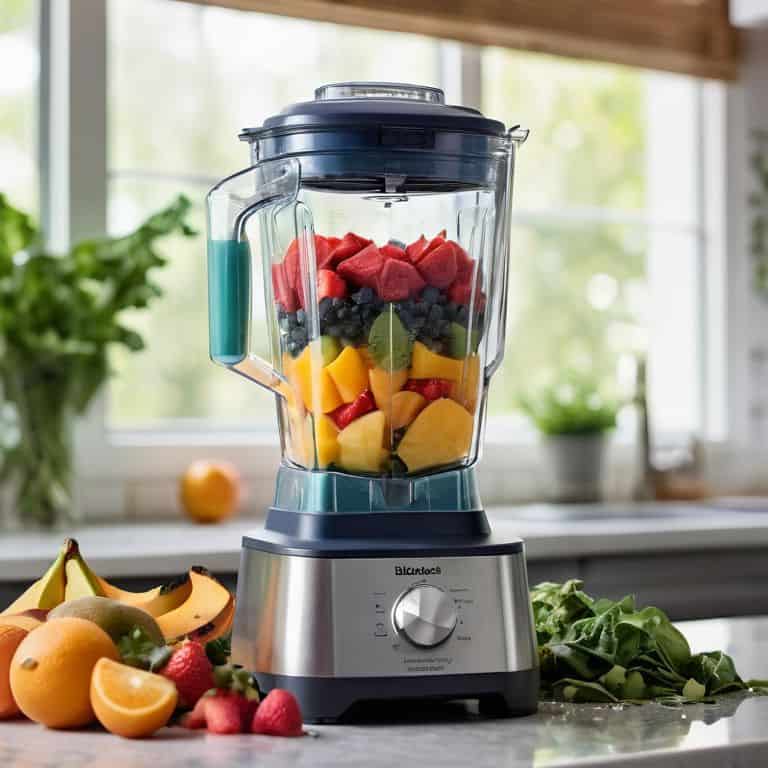
A regular blender is a stationary kitchen appliance designed to puree, mix, or blend food and liquids in a dedicated container, with its primary advantage being its high-speed blending capability for smooth and consistent results. The main mechanism of a regular blender involves a fixed blade that spins at high velocities to break down ingredients, often requiring the user to transfer food to the blender’s container for processing. This can be a drawback for those with limited space or a preference for minimal cleanup.
For many, a regular blender is a staple appliance that has been a part of their kitchen landscape for years, reliably handling tasks from frozen drinks to homemade hummus. However, with the rise of minimalism and the desire for more efficient kitchens, the question arises: can a regular blender justify its relatively large footprint, or are there more streamlined options available that can deliver similar results without the bulk? As someone who’s passionate about finding the most space-saving solutions, I’m eager to explore whether an immersion blender can indeed replace a traditional blender in my own kitchen.
Head-to-Head Comparison: Immersion Blender vs Regular Blender
| Feature | Immersion Blender | Regular Blender |
|---|---|---|
| Price | $20-$50 | $50-$200 |
| Key Feature | Portable, handheld | High-speed, multi-functional |
| Best For | Soups, sauces, small batches | Large batches, frozen ingredients, smoothies |
| Speed | Lower speeds (1-5) | Higher speeds (5-20+) |
| Ease of Use | Easy to maneuver, less messy | More complex, louder operation |
| Storage | Compact, easy storage | Bulky, dedicated counter space |
| Cleaning | Easy to clean, dishwasher safe | More difficult, not all parts dishwasher safe |
Blender Replacement
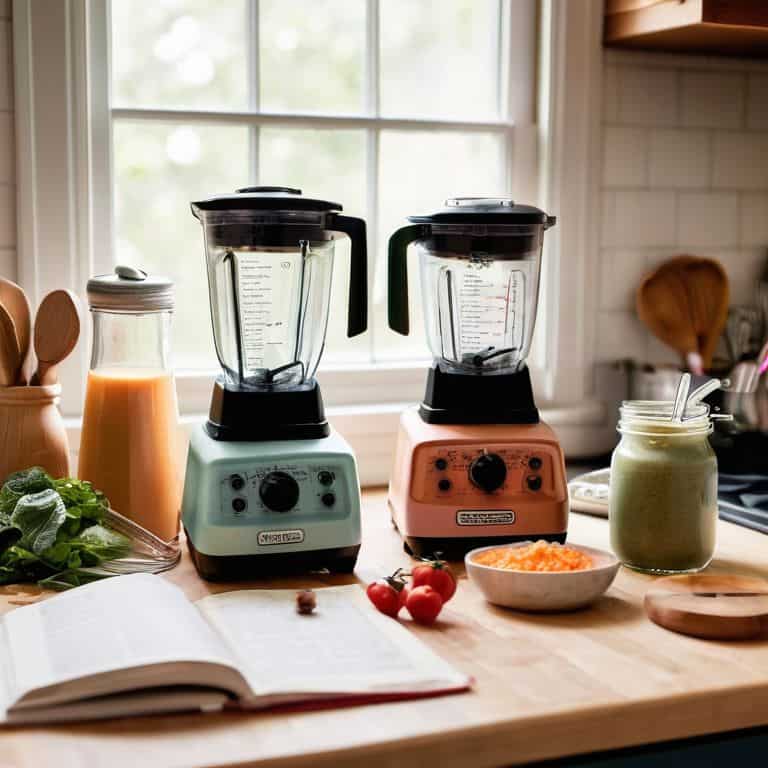
When considering whether an immersion blender can replace a regular blender, the blender replacement criterion is crucial. It’s all about finding a tool that can handle the tasks you need it to, without taking up too much space in your tiny kitchen. For me, it’s about streamlining my cooking process and getting rid of unnecessary gadgets.
In a head-to-head analysis, regular blenders are generally better at handling large quantities and thicker mixtures, making them a better choice for tasks like making smoothies or pureed soups. However, immersion blenders shine when it comes to precision control, allowing for more targeted blending and less mess. This makes them ideal for smaller tasks, like mixing sauces or soups right in the pot.
In conclusion, when it comes to the blender replacement criterion, I’d say that regular blenders still have the edge, but only just. For those with very limited space, an immersion blender can be a capable substitute, but it’s essential to be aware of its limitations and adjust your expectations accordingly.
Key Takeaways: Immersion Blender vs Regular Blender
I’ve found that an immersion blender can indeed replace a regular blender for most small kitchen tasks, like making smoothies or pureeing soups, saving you valuable counter space
In terms of cost and maintenance, immersion blenders are generally cheaper and easier to clean than traditional blenders, which is a significant factor for those of us living in tiny kitchens
However, for large batches or thicker mixtures, a regular blender still outperforms an immersion blender, so it’s essential to consider your specific cooking habits before deciding which one earns a spot in your kitchen
The Verdict
For me, the ultimate test of any kitchen gadget is whether it can earn its keep in my tiny space – and I’ve found that a good immersion blender can indeed replace a traditional blender, freeing up precious counter space for the things that truly matter.
Clara Finch
The Final Verdict: Which Should You Choose?
After careful consideration, it’s clear that both immersion blenders and regular blenders have their strengths and weaknesses. The key to deciding between them lies in understanding your specific needs and lifestyle. If you’re looking for a space-saving solution that can handle small to medium-sized blending tasks, an immersion blender might be the way to go. On the other hand, if you’re someone who frequently makes large batches of smoothies or frozen drinks, a regular blender is likely a better fit.
Ultimately, the best choice for you will depend on your individual circumstances. If you’re a busy professional with limited kitchen space, an immersion blender is probably the better option. However, if you’re an avid cook or entertainer who needs to make large quantities of blended dishes, a regular blender is the way to go. As someone who values minimalism and efficiency, I would recommend the immersion blender for its versatility and convenience, but it’s essential to weigh your options carefully and consider what will work best for your unique situation.
Frequently Asked Questions
Will I have to sacrifice performance if I switch to an immersion blender for daily smoothies and soups?
Honestly, I was skeptical about performance too, but after testing, I found that a good immersion blender can handle daily smoothies and soups with ease, especially if you’re making smaller batches. You might need to blend in shorter bursts, but the results are surprisingly similar to a traditional blender.
How does the cleaning process differ between immersion blenders and traditional blenders, and which is more convenient?
Honestly, cleaning is a major factor in my tiny kitchen. Immersion blenders are a breeze to clean – just toss the detachable blade and shaft in the dishwasher or wash by hand. Traditional blenders, on the other hand, can be a pain with all their nooks and crannies. For me, the immersion blender wins on convenience and ease of cleaning.
Are immersion blenders capable of handling tough ingredients like ice or frozen fruit, or are they better suited for softer foods?
Honestly, I’ve put my immersion blender to the test with frozen fruit and ice, and while it can handle them, it’s not always a breeze. Softer foods like soups and yogurts are a cinch, but for tougher ingredients, you may need to blend in smaller batches or add a little liquid to help it along.