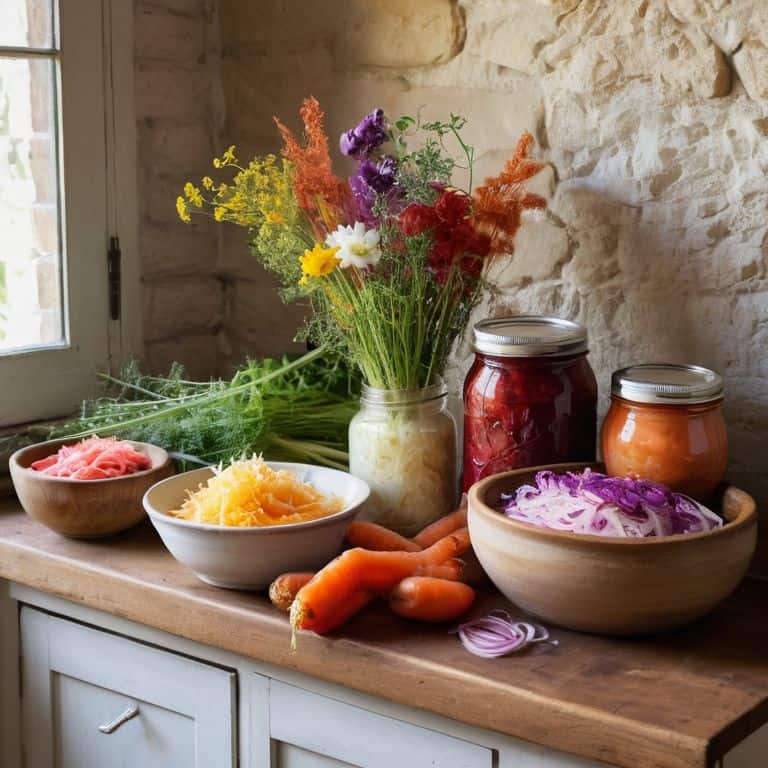
I still remember the first time I tried making my own kimchi – it was a game-changer for my digestion and energy levels. As a holistic nutritionist, I’ve seen firsthand how a guide to fermented foods for gut health can be a total mystery for many of my clients. They often think that fermented foods are weird or complicated to make, but trust me, it’s easier than you think. I’ve been experimenting with root-to-stem cooking and fermenting for years, and I’m excited to share my knowledge with you.
In this article, I’ll give you the lowdown on how to get started with fermented foods, from the basics of fermentation to my favorite recipes for kimchi and sauerkraut. You’ll learn how to turn your kitchen into a fermentation station, and how to make delicious, gut-friendly foods that will make you feel amazing. I’ll share my tips and tricks for making fermentation easy, fun, and accessible, even if you have a tiny kitchen. So, if you’re ready to take control of your gut health and start feeling the benefits of fermentation, keep reading – I’ve got you covered.
Table of Contents
Guide Overview: What You'll Need

Total Time: 2 weeks to several months
Estimated Cost: $20 – $100
Difficulty Level: Easy / Intermediate
Tools Required
- Large Glass Jars (with lids)
- Colander (for rinsing)
- Cheesecloth (or a clean, thin towel)
- Weight (such as a plate or a fermentation weight)
- Measuring Cups and Spoons (for precise measurements)
Supplies & Materials
- Vegetables (such as cabbage, carrots, or cucumbers)
- Salt (unrefined, non-iodized)
- Water (filtered or spring water)
- Starter Culture (optional, for specific fermented foods)
- Spices and Herbs (for flavor, optional)
Step-by-Step Instructions
- 1. First, let’s start with the basics: understanding the fermentation process. It’s essential to know that fermentation is a natural process that occurs when bacteria or yeast feed on the sugars in food, producing lactic acid and creating an environment that’s inhospitable to bad bacteria. This process not only preserves food but also creates a rich source of probiotics, which are amazing for our gut health.
- 2. To get started with fermenting, you’ll need to gather a few simple ingredients and tools, including a large glass jar or container with a wide mouth, a fermentation weight, and some cheesecloth or a breathable cloth. I like to use mason jars because they’re easy to find, affordable, and perfect for small-batch fermenting. Make sure your jars are clean and sanitized before use to avoid any contamination.
- 3. Next, you’ll need to prepare your ingredients. For a simple sauerkraut recipe, you’ll need some cabbage, salt, and any optional spices or flavorings you like. The key is to shred the cabbage finely so that it ferments evenly. I also like to add some caraway seeds for extra flavor and nutrition.
- 4. Now it’s time to create the perfect environment for fermentation. In a large bowl, mix your shredded cabbage with salt, making sure to massage the salt into the cabbage to help release its juices. This step is crucial for creating the right amount of liquid for fermentation. You want the cabbage to be coated in a nice, salty brine that will help to preserve it and encourage the growth of good bacteria.
- 5. Once your cabbage is mixed with salt, it’s time to pack it into your jar. Use your hands or a utensil to press the mixture down firmly, making sure to remove any air pockets. You want the cabbage to be packed tightly, with the brine covering all of the solids. This is where your fermentation weight comes in – place it on top of the cabbage to keep everything submerged under the liquid.
- 6. Cover your jar with cheesecloth or a breathable cloth, securing it with a rubber band. This will allow air to escape while keeping dust and other contaminants out. Now, it’s time to wait – fermentation typically takes anywhere from a few days to several weeks, depending on the recipe and the environment. I like to place my jars in a cool, dark spot and check on them regularly to monitor their progress and taste the fermentation.
- 7. As your ferments start to mature, you’ll begin to notice a sour smell and a tangy flavor. This is a sign that the fermentation process is working its magic! Once your ferments have reached the desired level of sourness, you can store them in the fridge to slow down the fermentation process. I like to use my ferments in a variety of dishes, from salads and sandwiches to soups and stews – the possibilities are endless, and I love experimenting with new fermentation recipes.
- 8. Finally, don’t be afraid to experiment and try new things! Fermentation is an art, not a science, and there’s always room for creativity and innovation. I encourage you to play around with different ingredients, spices, and recipes to find what works best for you and your taste preferences. And remember, the key to successful fermentation is to be patient and observant – with a little practice, you’ll be a fermentation pro in no time!
A Guide to Fermented Foods for Gut Health
As I delve deeper into the world of fermented foods, I’ve come to realize the importance of gut microbiome balance in our overall well-being. It’s amazing how something as simple as eating probiotic rich foods for digestion can have a profound impact on our energy levels and mood. I’ve noticed a significant difference in my own health since incorporating fermented foods into my diet, and I’m excited to share that with you.
When it comes to the fermentation process for beginners, it’s essential to start small and experiment with different ingredients. I recommend beginning with simple recipes like sauerkraut or kimchi, and then gradually moving on to more complex ferments like kefir or kombucha. Health benefits of fermented vegetables are numerous, and by incorporating them into your diet, you can experience improved digestion, boosted immunity, and even mental clarity.
To make the most of your fermented food journey, I suggest gut friendly meal planning tips like planning your meals around seasonal produce and incorporating fermented foods into your daily routine. You can start by adding a spoonful of sauerkraut to your salads or using kimchi as a topping for your favorite dishes. By making these small changes, you can experience the benefits of fermented foods firsthand and take the first step towards a healthier, happier you.
Fermenting for Joy Probiotic Rich Foods
For me, fermenting is about more than just gut health – it’s a way to connect with my food and my community. I love experimenting with different probiotic-rich foods like kimchi, sauerkraut, and kefir. There’s something special about watching a jar of vegetables transform into a tangy, crunchy snack that’s bursting with flavor and nutrients. I’ve found that incorporating these foods into my daily routine has not only improved my digestion, but also given me a sense of joy and fulfillment.
Some of my favorite probiotic-rich foods to ferment at home include miso, tempeh, and kombucha. I love playing around with different seasonings and ingredients to create unique flavor profiles. Whether I’m making a spicy kimchi or a soothing miso soup, I know I’m nourishing my body and soul.
Gut Friendly Meal Planning With Fermented Veggies
When it comes to gut-friendly meal planning, I love incorporating fermented veggies into my dishes. Not only do they add a burst of flavor, but they’re also packed with probiotics that support a healthy gut. I like to think of fermented veggies as a condiment, adding them to everything from salads to sandwiches. My favorite way to use them is in a simple slaw made with fermented cabbage, carrots, and a drizzle of apple cider vinegar.
I also enjoy experimenting with different fermented veggie combinations to create new recipes. For example, I’ll mix fermented beets with goat cheese and walnuts for a delicious and healthy snack. The key is to have fun and get creative with your fermented veggies – they can elevate even the simplest meals into something truly special.
My Top 5 Tips for a Happy Gut with Fermented Foods
- I always say, start small – begin with one fermented food you love, like kimchi or sauerkraut, and add it to your meals daily to get your gut in sync
- Experiment with different fermentation times to find the perfect tang for your taste buds, and don’t be afraid to try new recipes
- Make it a habit to shop for seasonal veggies at your local farmers’ market and ferment them to enjoy year-round, it’s a game-changer for your gut and your wallet
- Don’t toss those scraps – use every part of the veggie, from roots to stems, to create nutrient-dense fermented foods that will make your gut (and the planet) happy
- Get creative with your mason jars – ferment a new food each week, like kefir or kombucha, and watch your energy levels and digestion transform over time
Nourishing Your Way to Gut Health: 3 Key Takeaways
I’ve learned that incorporating fermented foods into my diet has been a game-changer for my energy levels and digestion, and I’m excited to share that same joy with you through simple, budget-friendly recipes
By embracing a ‘root-to-stem’ approach to cooking and getting creative with fermentation, you can reduce food waste, save money, and nourish your body with nutrient-dense meals
Remember, a well-stocked pantry is key – even if it’s just one tiny shelf – and with a few simple tools like a mason jar, you can start making healthy, gut-friendly meals and snacks that will make you feel capable and confident in the kitchen
Nourishing Wisdom
Fermented foods aren’t just a trend, they’re a timeless tradition that can transform your gut health and reignite your passion for cooking – one jar of homemade kimchi at a time!
Jenna Matthews
Embracing the Power of Fermentation
As we conclude this journey through the world of fermented foods, I want to emphasize the importance of incorporating these probiotic-rich foods into your daily meals. From the spicy kick of homemade kimchi to the tangy zip of sauerkraut, fermented foods are not only delicious but also packed with gut-friendly benefits. By following the simple steps outlined in this guide, you can start experiencing the advantages of a balanced gut, from boosted energy levels to a stronger immune system. Remember, the key to success lies in starting small and being consistent – begin with one or two fermented foods and gradually experiment with new recipes and flavors.
As you embark on this fermented food journey, I encourage you to view it as a path to self-discovery, a way to nourish your body and soul. Don’t be afraid to get creative, to try new things, and to make mistakes – it’s all part of the process. With time and practice, you’ll find that the art of fermentation becomes a labor of love, a way to connect with your food, your community, and yourself on a deeper level. So go ahead, take the first step, and watch how the simple act of fermentation can transform your relationship with food and your overall well-being.
Frequently Asked Questions
What are some common mistakes to avoid when fermenting foods at home?
When fermenting at home, I’ve learned to avoid a few common pitfalls – like not sterilizing my equipment or using too little salt. These mistakes can lead to mold or yeast overgrowth, ruining my batch. I also make sure to keep my ferments away from direct sunlight and heat sources, and to be patient, as rushing the process can result in inconsistent flavors and textures.
How can I incorporate fermented foods into my daily meals if I have a sensitive stomach?
Start small, friend! If you have a sensitive stomach, try adding a tiny spoonful of fermented food, like kimchi or sauerkraut, to your meals and gradually increase the amount. You can also begin with milder ferments like kefir or yogurt to ease into it. Listen to your body and adjust as needed.
Are there any specific fermented foods that are higher in probiotics than others?
Honestly, some of my favorite fermented foods are super high in probiotics – think kimchi, sauerkraut, and kefir. But if I’m being totally real, my go-to is homemade kombucha, it’s like a probiotic powerhouse in a mason jar!