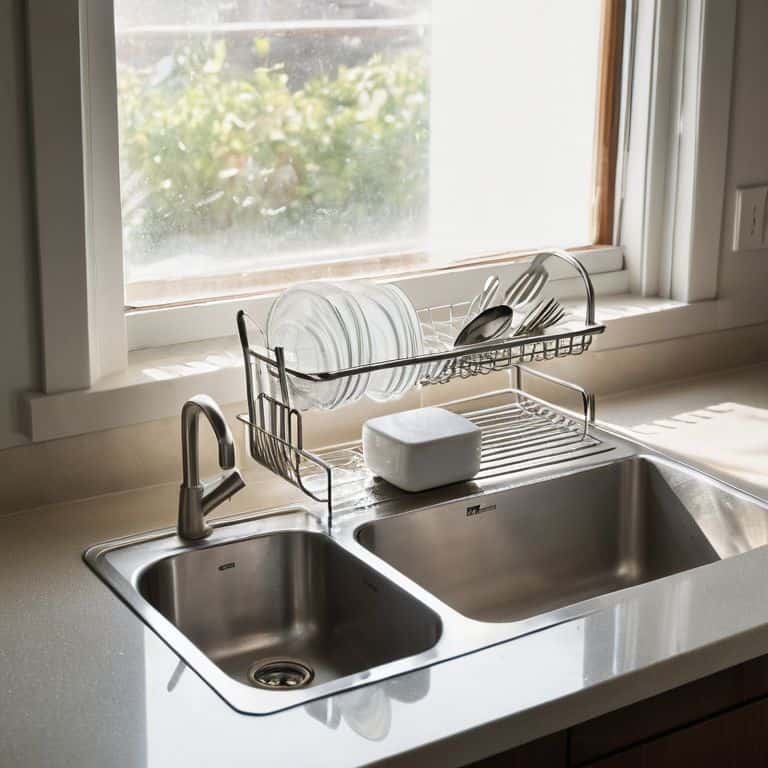
I still remember the day I realized that a good dish rack can be a total game-changer in a tiny kitchen – for me, it’s all about finding one that’s compact, yet can still hold a decent number of plates and bowls. When searching for what to look for in a small dish rack, I’ve found that most people prioritize size over functionality, but I believe that’s a mistake. A small dish rack should be more than just a space-saver; it should also be a hard worker, capable of holding multiple items without taking up too much valuable counter space.
In this article, I’ll share my honest, no-hype advice on what to look for in a small dish rack. I’ll cut through the clutter and give you a straightforward guide on how to choose a dish rack that truly earns its keep in your kitchen. You can expect practical tips and real-world examples of what works and what doesn’t, all from my own experience of living with a tiny kitchen. By the end of this guide, you’ll know exactly what to look for in a small dish rack, and how to make the most of your limited counter space.
Table of Contents
Guide Overview: What You'll Need
Total Time: 30 minutes to 1 hour
Estimated Cost: $10 – $30
Difficulty Level: Easy
Tools Required
- Tape Measure (for measuring available space)
- Level (to ensure proper installation)
- Screwdriver (for assembling the dish rack)
Supplies & Materials
- Dish Rack (compact or wall-mounted)
- Mounting Hardware (e.g., screws, nails, or adhesive strips)
- Waterproof Coating (optional, for protecting the dish rack from water damage)
Step-by-Step Instructions
- 1. First, let’s talk about the footprint score of your potential dish rack – essentially, how much counter space it’s going to occupy versus how much functionality it offers. When I’m testing out a new dish rack, I always consider whether it can hold a decent number of plates, bowls, and cups without taking up too much precious real estate.
- 2. Next, think about the material of the dish rack. I’m a big fan of stainless steel or silicone options because they’re easy to clean, durable, and can withstand the rigors of daily use. Avoid any dish racks with a lot of nooks and crannies where water can collect and breed bacteria.
- 3. Now, consider the drainage system of your dish rack. A good dish rack should allow water to flow freely, preventing any water spots or mineral deposits from forming on your dishes. Look for a dish rack with a built-in drainage system or a design that allows water to escape easily.
- 4. The adjustability of the dish rack is also crucial, especially if you have a lot of different-sized dishes. I love dish racks with adjustable arms or tiers that can accommodate everything from large plates to small cups. This feature will help you make the most of your dish rack’s space.
- 5. Another important factor is the weight capacity of the dish rack. You don’t want a dish rack that’s going to topple over under the weight of a few heavy plates or bowls. Look for a dish rack with a sturdy base and a weight capacity that can handle your everyday dishes.
- 6. When it comes to ease of cleaning, I’m all about simplicity. A good dish rack should be easy to disassemble and clean, with no tricky parts or hidden crevices where food particles can accumulate. I’m a big fan of dish racks with removable parts that can be tossed in the dishwasher for a deep clean.
- 7. Finally, think about the multi-functionality of your dish rack. Can it hold more than just dishes? Some dish racks come with built-in utensil holders, cutting boards, or even wine glass holders. Consider what features are must-haves for you and look for a dish rack that checks all those boxes.
Ruthless Edit Small Dish Racks

When it comes to compact dish drying solutions, I’ve found that a good dish rack can make all the difference in a tiny kitchen. For me, it’s all about finding one that’s not only space-saving, but also has a dish rack with utensil holder to keep my countertops clutter-free. I’ve tested a few different models, and I have to say, the ones with foldable designs are total winners – they’re perfect for small kitchens where storage is limited.
In my experience, small kitchen organization ideas often come down to choosing the right materials. When it comes to dish racks, I’m a big fan of dish rack materials comparison – some materials are just more durable and easy to clean than others. For example, stainless steel racks are often more resistant to rust and corrosion than their plastic counterparts. Plus, they just look nicer, which is a bonus in a small kitchen where every detail counts.
As someone who’s passionate about space saving kitchen utensils, I’m always on the lookout for ways to streamline my kitchen. One thing I’ve learned is that a good dish rack can be a total game-changer – it’s all about finding one that’s functional and efficient, and that fits with your overall kitchen aesthetic. By choosing a rack that’s both compact and stylish, you can keep your kitchen looking and feeling its best, even in tight spaces.
Compact Solutions for Tiny Kitchens
When it comes to tiny kitchens, every inch counts. That’s why I’m obsessed with finding compact solutions that actually deliver. A good small dish rack should be able to hold a decent number of plates and bowls without taking up too much precious counter space. For me, it’s all about the footprint score – how much value does it bring versus the space it occupies? I’ve tested a few options, and let me tell you, some are total space-wasters. But the ones that make the cut are absolute game-changers.
I’m talking about dish racks that can fit snugly in a corner, or ones that fold up when not in use. These are the kinds of innovative designs that can make a real difference in a tiny kitchen. By choosing a compact dish rack, you can free up valuable space for the things that really matter – like a good chef’s knife or a multi-use kitchen tool. It’s all about prioritizing functionality and simplicity.
Space Saving Materials Matter
When it comes to small dish racks, the material can make all the difference in terms of space-saving. I’m a big fan of stainless steel or aluminum racks – they’re lightweight, durable, and can be easily folded or compacted when not in use. Some models even come with a slim, wall-mountable design that can be hung above the sink, freeing up precious counter space. I’ve also come across racks made from silicone or plastic that can be collapsed or folded, taking up minimal storage space when not in use. These designs are perfect for tiny kitchens where every inch counts.
The Essential Checklist: 5 Key Tips for Your Dream Dish Rack
- Measure your counter space before buying, considering the rack’s folded or compact size to ensure it fits when not in use
- Look for a dish rack with multiple tiers or a clever design that maximizes vertical space, allowing you to dry more dishes in less footprint
- Opt for a rack made from durable, water-resistant materials like stainless steel or silicone, which are easy to clean and will withstand frequent use
- Consider a dish rack with a built-in tray or drip Dry feature to catch water and food particles, making cleanup a breeze and reducing counter mess
- Assess the rack’s capacity and adjustability, ensuring it can accommodate your largest or most oddly-shaped items, like stockpots or colanders, with ease
Key Takeaways for the Perfect Dish Rack
I only consider a dish rack worthy if it can hold at least 4 plates and 2 bowls in a footprint smaller than 12 inches by 8 inches
A good dish rack must also be made from a durable, easy-to-clean material – I’m a big fan of stainless steel or heavy-duty plastic
When in doubt, remember that a great dish rack should be a multi-tasker: look for one with built-in utensil holders, a tray for catching water, or a foldable design for easy storage
The Dish Rack Litmus Test
A good small dish rack isn’t just about holding your plates, it’s about earning its keep in your kitchen – it should be a masterclass in minimalism, maximizing storage without monopolizing counter space.
Clara Finch
The Final Verdict: A Dish Rack that Earns its Space
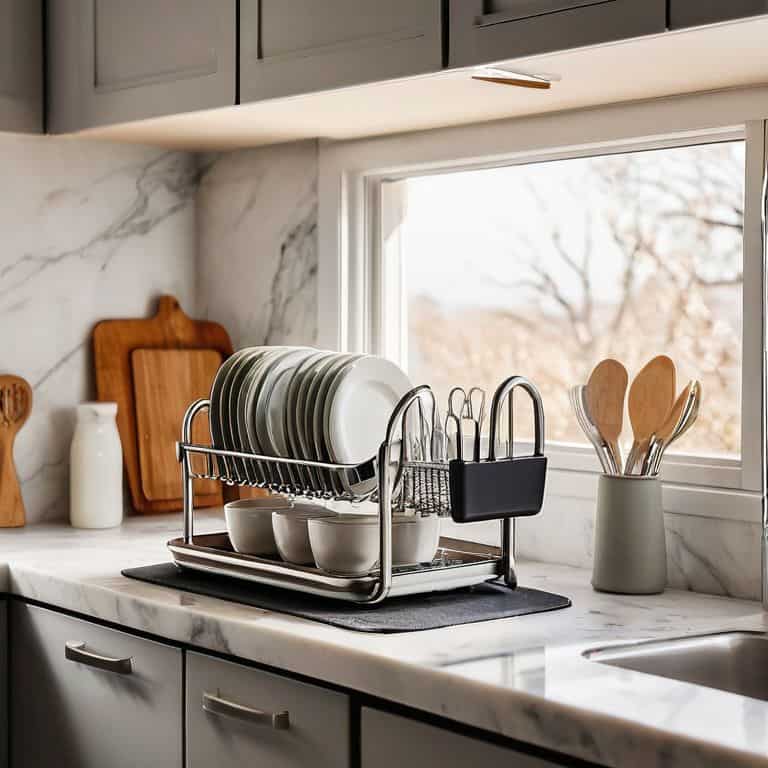
As I wrap up my guide on what to look for in a small dish rack, I want to emphasize the importance of considering the unique needs of your tiny kitchen. We’ve covered the essential steps to finding the perfect dish rack, from measuring your counter space to evaluating the material and design. In the ‘Ruthless Edit’ section, we dove into compact solutions and space-saving materials that can make a significant difference in your kitchen’s functionality. By applying these principles, you’ll be well on your way to selecting a dish rack that not only saves space but also streamlines your cleaning process.
So, the next time you’re in the market for a small dish rack, remember that it’s not just about finding a product that fits your kitchen – it’s about investing in a tool that will help you maintain a sense of calm and order in your daily life. As someone who’s passionate about minimalist living, I believe that the right dish rack can be a game-changer. It’s a small but significant step towards creating a more efficient and peaceful living space, and I hope this guide has inspired you to take that step with confidence.
Frequently Asked Questions
How do I measure my kitchen counter to ensure the dish rack I choose fits perfectly?
To ensure a perfect fit, measure your counter’s width and depth where you plan to place the dish rack. Consider any obstructions, like faucets or outlets. I like to use a flexible measuring tape to get an accurate reading, and then subtract about an inch to account for any walls or edges.
What features should I prioritize in a small dish rack to make sure it can hold all my dishes without taking up too much space?
For me, it’s all about a dish rack’s plate capacity and footprint. Look for one with adjustable tines and a compact base that can hold at least 4-6 plates, and won’t hog your counter space. I also swear by racks with built-in utensil holders to keep clutter at bay.
Are there any specific materials or designs that are more durable and easy to clean in a small dish rack?
For durability and ease of cleaning, I swear by stainless steel or sturdy plastic dish racks with a simple design. Avoid fancy features that just collect water and grime. Look for racks with a smooth, waterproof coating and a compact footprint that won’t hog your counter space.